

If you’ve ever paused mid-sentence wondering whether it’s “barrel” or “barrell,” you’re not alone. This one-letter mix-up shows up in emails, blog posts, and even published articles more often than you’d think.
The confusion around Barrel vs Barrell usually comes down to two things: the extra L that sneaks in from words like “barrelled,” and the fact that “Barrell” also exists as a real surname. Both facts make the wrong spelling feel oddly familiar.
This guide clears up the Barrel vs Barrell debate for good. You’ll learn the correct spelling, how the word works as a noun and a verb, and why British and American English handle it a little differently.
Quick Answer: Barrel vs Barrell
“Barrel” is the correct spelling.
“Barrell” is not a standard English word; it’s a misspelling, except when it’s used as a proper noun (a surname).
| Term | Correct? | Common Use |
| Barrel | ✅ Yes | Noun (container, unit of measure) and verb (to move fast) |
| Barrell | ❌ Not standard | Only correct as a surname (e.g., Charles Barrell) |
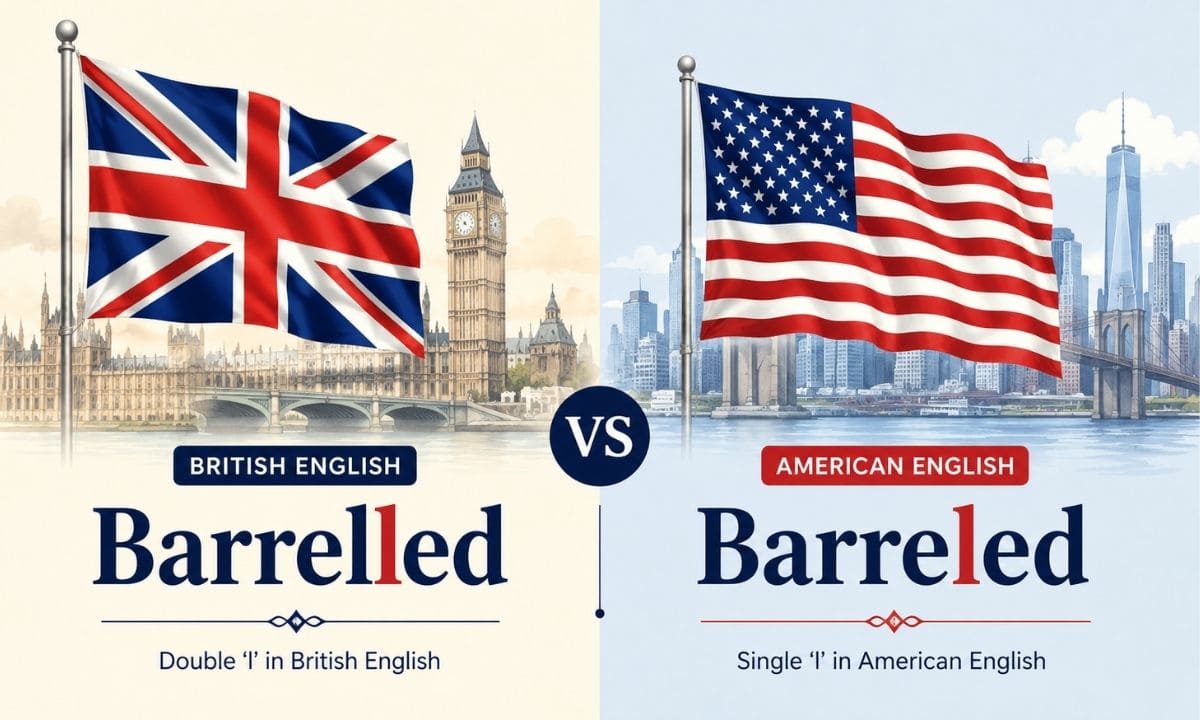
| Barrelled | ✅ Yes (British) | Past tense of “barrel” |
| Barreled | ✅ Yes (American) | Past tense of “barrel” |
What Does “Barrel” Mean?
“Barrel” is a versatile word. It works as both a noun and a verb, and its meaning shifts depending on context.
Barrel as a Noun
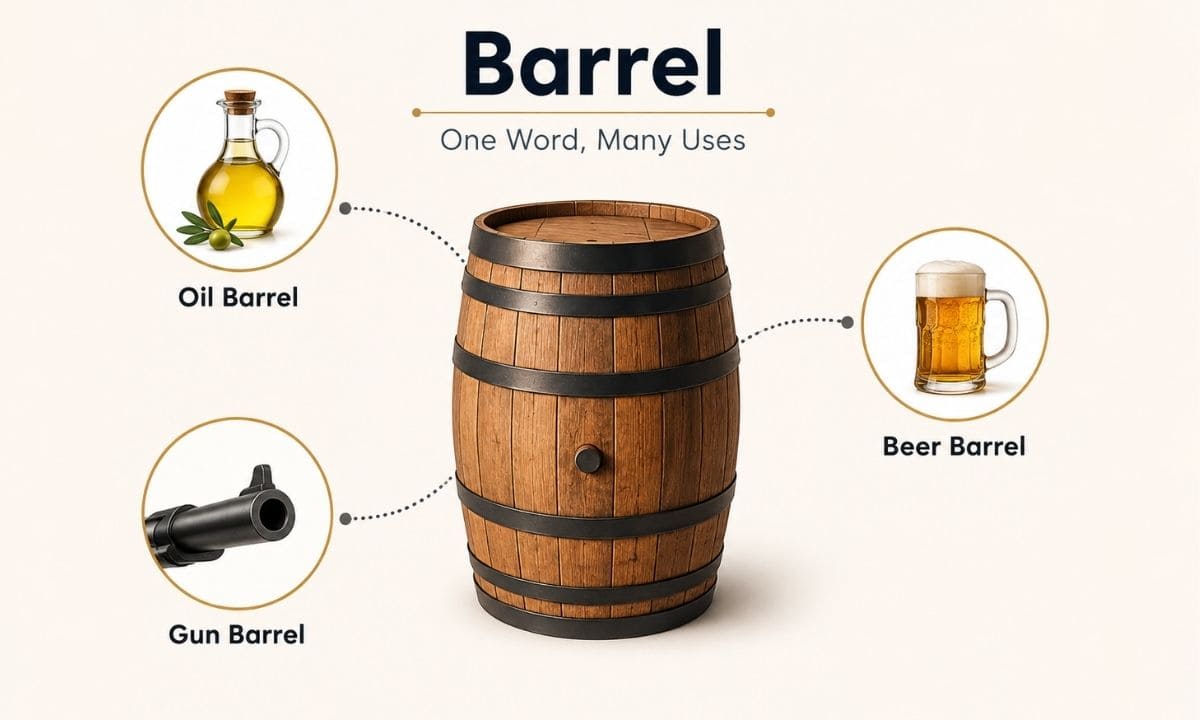
As a noun, a barrel is a round, hollow container, usually wider in the middle than at the ends. It’s also used as a unit of measurement, especially in the oil industry.
Common noun uses include:
- A wooden or metal container for liquids like wine, beer, or water
- A standard unit of volume (a barrel of oil equals 42 US gallons)
- The long metal tube of a gun through which a bullet travels
- The rounded midsection of a horse’s body
Barrel as a Verb
As a verb, “barrel” means to move quickly and often carelessly, usually in a straight line.
- “The truck came barreling down the highway.”
- “She barreled through the crowd to catch her flight.”
How to Use “Barrel” in a Sentence
Seeing the word in context makes the spelling easier to remember. Here are a few natural examples:
The winery stores its best red wine in oak barrels.
Oil prices rose to $85 a barrel this week.
He barreled down the stairs, late for work again.
The old rain barrel sat rusting behind the shed.
Is “Barrell” a Word?
Not in standard English usage.
“Barrell” is not listed as a common noun or verb in any major dictionary Merriam-Webster, Collins, and Oxford all recognize only “barrel.”
The one exception: Barrell is a legitimate English surname.
Several notable people carry this last name, including musicians, politicians, and academics.
So if you see “Barrell” used correctly, it’s almost always referring to a person’s name, not the container or the verb.
Why “Barrell” Is Commonly Misspelled
People add the extra L for a few understandable reasons:
Words like “barrelled” and “barrelling” (British spellings) already contain double Ls, which creates confusion about the base word.
Autocorrect and spellcheck tools sometimes miss the error, especially in casual writing.
The surname “Barrell” appears often enough in search results and articles that it blurs the line for readers.
When You May See Double-L Forms
Double Ls do belong in certain related words just not in the base form.
In British English, “barrel” becomes “barrelled” and “barrelling” when a suffix is added.
This is where writers often get tripped up and assume the root word should carry the double L too.
Where Does “Barrel” Come From?
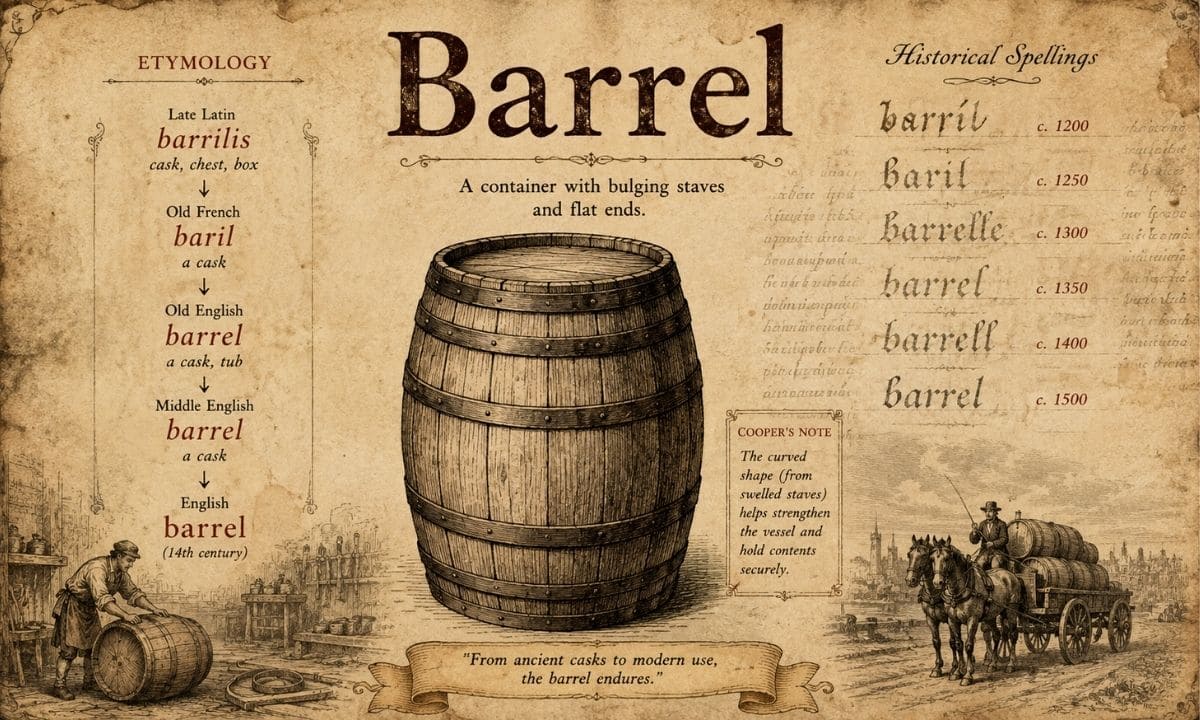
“Barrel” traces back to the Old French word “baril,” which referred to a cask or container.
It moved into Middle English with a similar spelling and meaning, and the modern single-L form has stayed stable for centuries.
This history is part of why “Barrell,” with its extra letter, never became the standard English spelling; it simply isn’t how the word evolved.
Barrel vs Barrell: The Key Difference
At its core, the Barrel vs Barrell question has a simple answer: one is a real, functional word, and the other is a name.
| Feature | Barrel | Barrell |
| Word Type | Noun / Verb | Proper noun (surname only) |
| Standard Dictionary Entry | Yes | No (as a common word) |
| Everyday Usage | Very common | Rare, name-specific |
| Correct Spelling of the Container Word | Yes | No |
Once you see it laid out this way, the mix-up becomes much easier to avoid.
The Grammar Rules Behind “Barrel”
English spelling rules explain why “barrel” keeps a single L, while its inflected forms sometimes double it.
Why “Barrel” Ends in One L
“Barrel” already ends in a single L, and that stays true in its base form, plural form (“barrels”), and in American spellings of its verb forms.
The double L only appears when British spelling conventions double the final consonant before adding “-ed” or “-ing.”
Barrel → Barrelled / Barrelling (British English)
In British English, the final L doubles before a vowel suffix, giving you:
- Barrel → Barrelled (past tense)
- Barrel → Barrelling (present participle)
Barrel → Barreled / Barreling (American English)
American English follows a different pattern and keeps a single L:
- Barrel → Barreled
- Barrel → Barreling
Neither version uses “Barrell” as the base word; the extra L only ever appears in the inflected forms, and only in specific regional spelling systems.
Common Phrases and Expressions With “Barrel”
The word shows up in plenty of everyday idioms and set phrases:
Barrel of oil a standard unit in the energy industry
Barrel of laughs someone or something very funny
Over a barrel being in a difficult position with no good options
Barrel roll a full rotation, often used for stunts or in video games
Barrel through to push forward forcefully, ignoring obstacles
Lock, stock, and barrel meaning everything, completely
None of these expressions use “Barrell.” That extra L simply doesn’t belong in any recognized phrase.
Common Mistakes With “Barrel” and “Barrell”
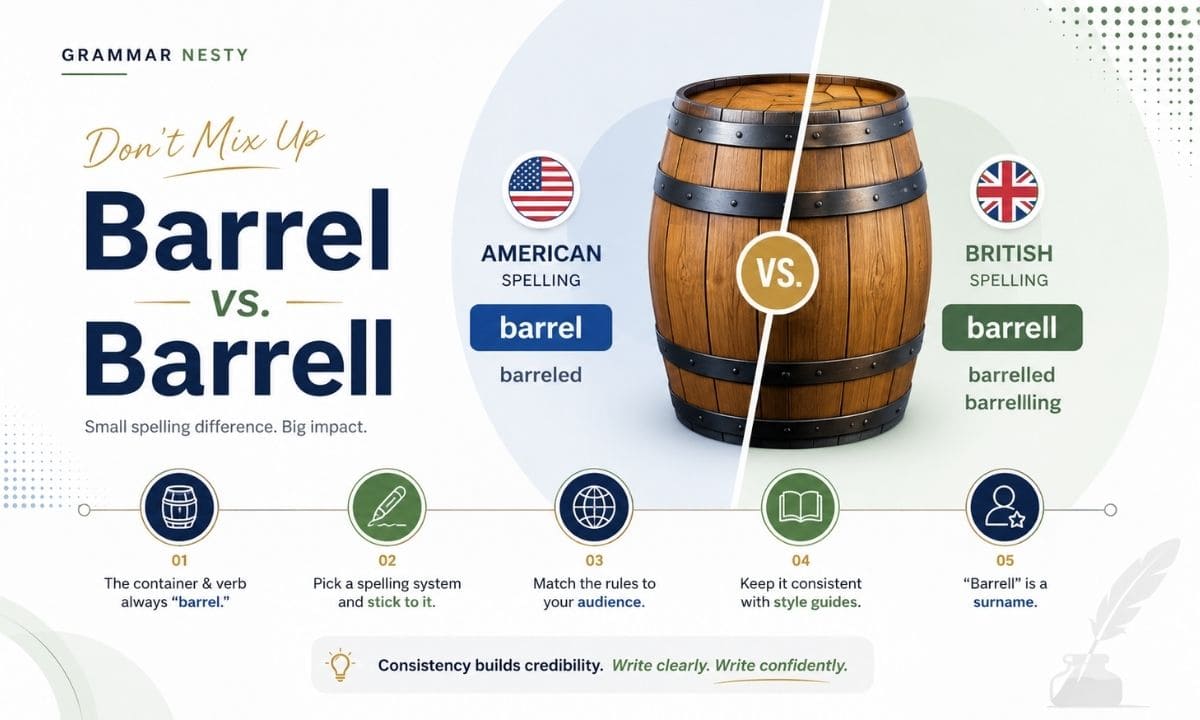
Even confident writers slip up here. Watch for these patterns:
Writing “Barrell” as the base word, the container and the verb are always spelled “barrel.”
Mixing up “barreled” and “barrelled” pick one spelling system (American or British) and stay consistent throughout your document.
Applying British rules in American writing using “barrelling” in a US-audience article looks like a typo to American readers.
Dropping the required double L in British spelling writing “barreled” in British-English content is technically inconsistent with UK style guides.
Assuming “Barrell” is always wrong, it’s correct only when referring to someone’s surname.
Explore More Grammar Guides
Stutter vs Studder: Correct Spelling and Meaning Guide in 2026
Anise vs Aniseed: Are They the Same? Find Out the Real Difference
Bellow vs Below: Meaning, Spelling, Grammar Rules & Sentence Examples
Really vs Realy? A Quick Guide to Correct English Spelling (2026)
Volume vs Volumn: 1 Common Mistakes and Correct Usage Explained
Habit vs Habbit: Common Error, Meaning, and Usage Guide
Using vs Useing: Which Spelling Is Correct? Find Out Now
Divide vs Devide: Meaning, Examples, and Spelling Made Easy
Outing vs Outting: Common Mistakes and the Correct Usage Explained
Barrel vs Barrell: Quick Proofreading Tips
Before you hit publish, run through this short checklist:
Search your document for “Barrell” and confirm it’s a name, not a mistake.
Check that “barreled/barreling” or “barrelled/barrelling” match your target audience’s English variant.
Read the sentence aloud if it refers to a container, a unit of oil, or fast movement, it should always be “barrel.”
Use a dictionary check for uncertain cases rather than relying only on spellcheck.
Frequently Asked Questions
Is “barrel” or “barrell” correct?
“Barrel” is correct. “Barrell” is not a standard word; it’s only valid as a surname.
What is the difference between barrel and barrell?
“Barrel” is a common noun and verb used in everyday English. “Barrell” is a proper noun, used only as someone’s last name.
Is “barrell” a word?
Not as a common noun or verb. It exists solely as a surname in English.
What does “barrel” mean?
It refers to a round container for liquids, a unit of measurement (especially for oil), the tube of a gun, or the act of moving quickly.
Is “barrel” a noun or a verb?
It’s both. As a noun, it names a container or unit; as a verb, it describes fast, forceful movement.
How do you pronounce “barrel”?
It’s pronounced “BAR-uhl,” with the stress on the first syllable.
Why do some words related to “barrel” have two Ls?
British English doubles the final L before adding “-ed” or “-ing,” giving forms like “barrelled” and “barrelling.”
Is “barrelled” correct?
Yes, it’s the correct British English past tense of “barrel.”
Is “barreled” correct?
Yes, it’s the correct American English past tense of “barrel.”
What is another word for “barrel”?
Common synonyms include cask, drum, keg, and vat, depending on size and use.
Conclusion
The Barrel vs Barrell question has a clean answer once you know the rule: “barrel” is the correct spelling for the container, the unit of measurement, and the verb meaning to move fast. “Barrell,” on the other hand, only belongs in English as a surname.
Keep an eye on the inflected forms too. British writers should use “barrelled” and “barrelling,” while American writers should stick with “barreled” and “barreling.” Neither region uses “Barrell” as a base word, so that spelling should raise a flag whenever you spot it in your own writing.
Next time you’re stuck between Barrel vs Barrell, remember the simple test: if you’re talking about wine, oil, guns, or speed, it’s always “barrel” with one final L.

1 thought on “Barrel vs Barrell: Correct Spelling, Meaning, and Sentence Examples”