

Saying “attention” too many times in one piece of writing makes even a strong sentence feel flat. Whether you’re drafting an email, an essay, or a story, repeating the same word signals that your vocabulary is stuck on repeat. That’s why writers look for synonyms of words that carry the same idea while fitting the tone of a specific sentence.
This guide breaks down 25+ attention synonyms, grouped by meaning and tone, with clear definitions, examples, and quick usage tips plus formal versus casual options, dictionary definitions, close comparisons, and common mistakes to avoid.
By the end, you’ll know exactly which word to reach for, whether you’re writing a formal report, a casual text, or an academic paper.
Quick Answer
The best all-purpose attention synonyms are focus, concentration, awareness, notice, and consideration.
Focus and concentration suit tasks and mental effort, awareness and notice fit everyday observation, and consideration works well in formal, care-driven writing.
The right choice always depends on context.
What Does Attention Mean?
Before swapping the word out, it helps to know exactly what it covers.
Here’s a quick grounding before we compare dictionary definitions later on.
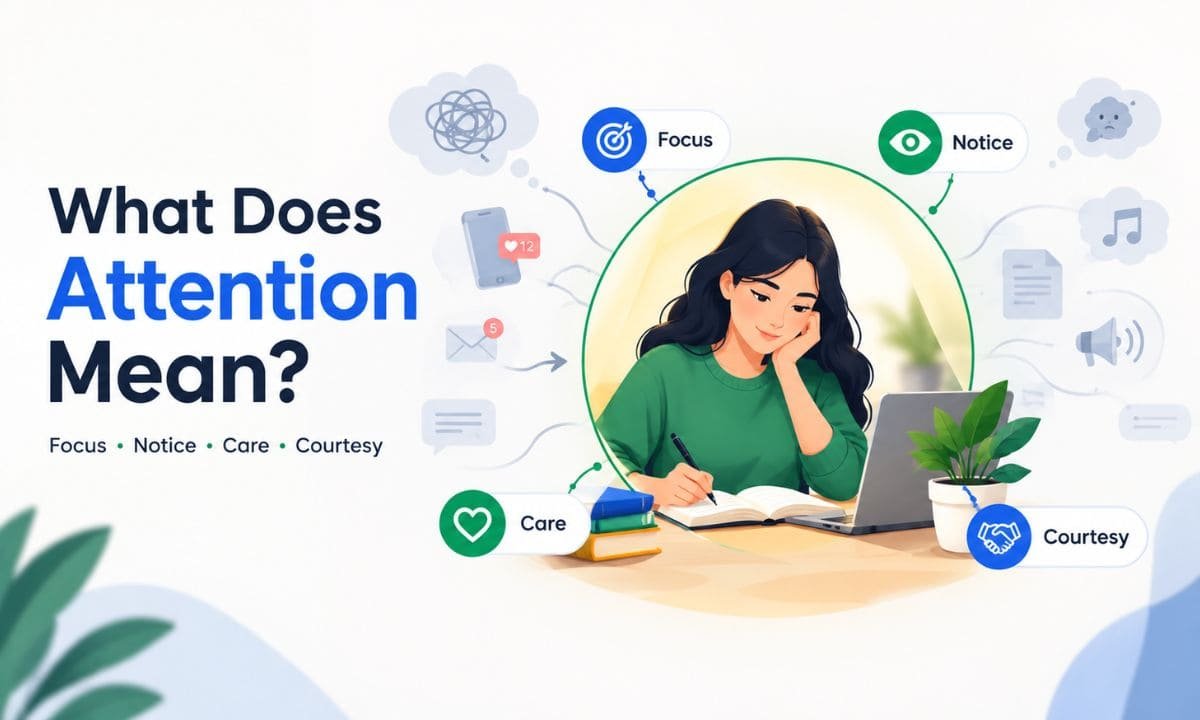
Attention means directing your mind toward something specific, a task, a person, a sound, or an idea rather than letting your thoughts wander. It can also mean care, courtesy, or the act of noticing something important.
Best Synonyms for Attention at a Glance
| Synonym | Best Used For | Tone |
| Focus | Tasks, goals, work | Neutral |
| Concentration | Studying, deep work | Formal |
| Awareness | General knowledge of something | Neutral |
| Notice | Spotting something quickly | Casual |
| Consideration | Thinking carefully about someone | Formal |
| Interest | Curiosity or engagement | Casual |
| Heed | Warnings, advice | Formal |
| Regard | Respectful attention | Formal |
25+ Attention Synonyms and Their Meanings
Here are 25 of the most useful attention synonyms explained one by one, each with a meaning, best-use context, a short introduction, three examples, and a usage tip.
Focus
Meaning
Directed effort toward one specific task or goal.
Best for
Work, goals, and general everyday writing.
Introduction
Focus is the most natural attention synonym to reach for when you’re describing active, goal-driven effort rather than passive noticing.
Examples
- “Keep your focus on the road.”
- “She lost focus during the meeting.”
- “His focus never wavered.”
Usage tip
Use focus for active, goal-directed effort, not passive noticing.
Concentration
Meaning
Deep, sustained mental effort applied to one subject.
Best for
Studying, exams, and detailed tasks.
Introduction
Concentration is a stronger, more formal version of focus, often used when mental effort needs to be sustained rather than momentary.
Examples
- “The puzzle required total concentration.”
- “Noise breaks my concentration.”
- “Her concentration impressed the examiner.”
Usage tip
Save concentration for sustained mental effort, not a quick glance.
Awareness
Meaning
Knowledge or perception of something, without necessarily acting on it.
Best for
General, everyday writing.
Introduction
Awareness is one of the most flexible attention synonyms, useful whenever someone simply knows something is happening without actively working on it.
Examples
- “She has a strong awareness of her surroundings.”
- “Public awareness of the issue grew.”
- “His awareness of the danger saved him.”
Usage tip
Use awareness for passive knowing rather than active effort.
Notice
Meaning
Observing or becoming conscious of something.
Best for
Casual, everyday writing.
Introduction
Notice is a simple, natural substitute for attention when someone spots or registers something briefly.
Examples
- “I didn’t notice the change at first.”
- “She took notice of his tone.”
- “Nobody noticed the mistake.”
Usage tip
Use notice for quick, informal observation, not sustained focus.
Observation
Meaning
Careful watching or monitoring over time.
Best for
Academic and analytical writing.
Introduction
Observation implies a more deliberate, ongoing form of attention than a passing notice, which is why it fits research and analysis so well.
Examples
- “The study relied on careful observation.”
- “Her observation skills are excellent.”
- “Doctors kept the patient under observation.”
Usage tip
Use observation for methodical or repeated watching.
Care
Meaning
Thoughtful attention given to someone’s wellbeing or a task’s quality.
Best for
Everyday and emotional writing.
Introduction
Care blends attention with genuine concern, making it a natural choice for relationships and quality-driven work.
Examples
- “Handle the package with care.”
- “She showed great care for her patients.”
- “His work reflects real care.”
Usage tip
Use care when attention and concern overlap.
Consideration
Meaning
Careful thought given to someone’s feelings or a situation.
Best for
Formal and professional writing.
Introduction
Consideration works well when attention involves thinking something through respectfully rather than simply observing it.
Examples
- “Please give this proposal your consideration.”
- “She showed consideration for his feelings.”
- “The matter needs further consideration.”
Usage tip
Use consideration for formal, respectful thought, not quick observation.
Regard
Meaning
Attention paired with respect or esteem.
Best for
Formal communication.
Introduction
Regard adds a layer of respect to plain attention, which is common in polite or official language.
Examples
- “He held her work in high regard.”
- “Please give this your due regard.”
- “She acted with regard for his opinion.”
Usage tip
Use regard when respect is part of the attention being shown.
Heed
Meaning
Careful attention paid to advice or warnings.
Best for
Cautionary and formal writing.
Introduction
Heed is a slightly old-fashioned, formal synonym best suited to warnings, advice, and instructions.
Examples
- “Take heed of the warning signs.”
- “He paid no heed to her advice.”
- “Sailors must heed the storm reports.”
Usage tip
Use heed mainly with warnings or instructions.
Interest
Meaning
Curiosity or engagement that draws attention naturally.
Best for
Casual and marketing writing.
Introduction
Interest describes attention that happens because something is genuinely engaging rather than because it’s required.
Examples
- “The topic sparked her interest.”
- “He showed little interest in the plan.”
- “Public interest in the story grew fast.”
Usage tip
Use interest when attention comes from curiosity, not obligation.
Absorption
Meaning
Being so involved in something that nothing else registers.
Best for
Creative writing and deep engagement.
Introduction
Absorption describes attention so complete it feels like the person has disappeared into the task at hand.
Examples
- “He read the novel with total absorption.”
- “Her absorption in the painting was obvious.”
- “The children watched with wide-eyed absorption.”
Usage tip
Use absorption for emotional or creative immersion, not routine tasks.
Application
Meaning
Sustained effort and diligence applied to a task.
Best for
Academic and professional writing.
Introduction
Application highlights the discipline behind sustained attention rather than a single moment of focus.
Examples
- “Success requires application and patience.”
- “She showed great application in her studies.”
- “His application to the project paid off.”
Usage tip
Use application when discussing effort over time, not a quick glance.
Alertness
Meaning
Active readiness to notice or respond to something.
Best for
Safety, driving, and security contexts.
Introduction
Alertness carries an edge of urgency that plain attention often lacks, making it useful when quick reaction matters.
Examples
- “The guard’s alertness prevented a break-in.”
- “Caffeine boosted her alertness.”
- “Stay alert while driving at night.”
Usage tip
Use alertness when readiness to react matters, not just passive noticing.
Vigilance
Meaning
Continuous, careful watchfulness against danger or error.
Best for
Security, health, and formal warnings.
Introduction
Vigilance is a stronger, more serious cousin of alertness, often used in formal or high-stakes contexts.
Examples
- “Constant vigilance kept the system secure.”
- “Parents need vigilance around water.”
- “The team’s vigilance caught the error early.”
Usage tip
Use vigilance for sustained, serious watchfulness, not casual attention.
Thoughtfulness
Meaning
Attention shown through kind, considerate action.
Best for
Personal and emotional writing.
Introduction
Thoughtfulness turns attention into a visible act of kindness rather than just a mental state.
Examples
- “Her thoughtfulness made the gift special.”
- “He thanked her for her thoughtfulness.”
- “Small acts of thoughtfulness matter most.”
Usage tip
Use thoughtfulness when attention results in a caring gesture.
Emphasis
Meaning
Special attention or importance given to a specific point.
Best for
Academic and business writing.
Introduction
Emphasis works when the attention being described is about highlighting importance rather than simply observing something.
Examples
- “The report places emphasis on safety.”
- “She spoke with emphasis on the deadline.”
- “Teachers put emphasis on grammar.”
Usage tip
Use emphasis for stressing importance, not general observation.
Mindfulness
Meaning
Deliberate, present-moment attention to one’s thoughts or surroundings.
Best for
Wellness and reflective writing.
Introduction
Mindfulness is a modern, intentional form of attention often linked to calm awareness rather than urgency.
Examples
- “Mindfulness helped reduce her stress.”
- “He practices mindfulness every morning.”
- “Mindfulness improves focus over time.”
Usage tip
Use mindfulness for intentional, calm attention, not urgent alertness.
Diligence
Meaning
Careful, persistent attention applied to work.
Best for
Professional and formal writing.
Introduction
Diligence highlights steady, responsible attention over time rather than a single burst of focus.
Examples
- “Her diligence impressed the manager.”
- “The audit required great diligence.”
- “He completed the task with diligence.”
Usage tip
Use diligence for consistent effort, not momentary focus.
Scrutiny
Meaning
Close, critical attention or examination.
Best for
Journalism, legal, and analytical writing.
Introduction
Scrutiny implies attention with a critical or investigative edge, going beyond simple observation.
Examples
- “The contract faced heavy scrutiny.”
- “Journalists put the claim under scrutiny.”
- “Her records were examined with scrutiny.”
Usage tip
Use scrutiny when attention involves judgment or investigation.
Prominence
Meaning
The state of being noticed because of importance or visibility.
Best for
Media, business, and public-facing writing.
Introduction
Prominence describes attention that comes from standing out rather than from someone deliberately focusing on something.
Examples
- “The scandal gave the story prominence.”
- “Her work gained prominence quickly.”
- “The issue rose to prominence last year.”
Usage tip
Use prominence for visibility-driven attention, not personal focus.
Recognition
Meaning
Attention given as acknowledgment of achievement or identity.
Best for
Professional and achievement-based writing.
Introduction
Recognition ties attention to credit or acknowledgment rather than simple noticing.
Examples
- “She earned recognition for her research.”
- “The award brought him recognition.”
- “Employees deserve recognition for hard work.”
Usage tip
Use recognition when attention is tied to merit or achievement.
Engrossment
Meaning
Complete absorption of attention in one activity.
Best for
Creative and descriptive writing.
Introduction
Engrossment is a strong synonym for total, immersive attention, best reserved for standout moments.
Examples
- “He read the letter with total engrossment.”
- “Her engrossment in the film was obvious.”
- “The game held their engrossment for hours.”
Usage tip
Use engrossment sparingly, for moments of complete immersion.
Watchfulness
Meaning
Alert, careful observation of surroundings or events.
Best for
Safety and cautionary writing.
Introduction
Watchfulness pairs the idea of attention with a readiness to react, similar to alertness but slightly more passive.
Examples
- “Her watchfulness kept the children safe.”
- “The guards maintained constant watchfulness.”
- “Watchfulness is key during storm season.”
Usage tip
Use watchfulness for ongoing, careful observation rather than a single glance.
Deference
Meaning
Respectful attention given to someone’s opinion or authority.
Best for
Formal and professional writing.
Introduction
Deference combines attention with respect for rank, experience, or seniority.
Examples
- “He listened with deference to his mentor.”
- “She treated the elder’s advice with deference.”
- “The junior staff showed deference to the director.”
Usage tip
Use deference when attention is shaped by respect for authority or seniority.
Courtesy
Meaning
Polite attention or consideration shown to others.
Best for
Customer service and formal writing.
Introduction
Courtesy frames attention as a form of politeness rather than mental effort or observation.
Examples
- “Please extend the same courtesy to all guests.”
- “She answered with courtesy despite the delay.”
- “Basic courtesy goes a long way in business.”
Usage tip
Use courtesy when attention is expressed through polite behavior.
Attention Synonyms by Context
The best alternative to attention changes depending on what the sentence actually means: mental effort, care, or simply noticing. A few more attention synonyms worth knowing: absorption, application, mindfulness, diligence, scrutiny, prominence, and recognition.
Attention Synonyms for Focus and Concentration
Focus,
Concentration,
Absorption,
Application
Attention Synonyms for Awareness and Observation
Awareness,
Notice,
Observation,
Alertness,
Vigilance
Attention Synonyms for Care and Consideration
Care,
Consideration,
Regard,
Thoughtfulness,
Heed
Attention Synonyms for Interest and Importance
Interest,
Emphasis,
Prominence,
Recognition
Attention Synonyms: Formal vs Casual
| Word | Tone | Best Context |
| Focus | Neutral | Work, general writing |
| Notice | Casual | Everyday conversation |
| Interest | Casual | Marketing, social writing |
| Awareness | Neutral | General knowledge |
| Concentration | Formal | Academic, technical writing |
| Consideration | Formal | Business emails |
| Diligence | Formal | Reports, workplace writing |
| Heed | Formal | Warnings, cautionary text |
Attention Synonyms for Professional Writing
Workplace writing calls for attention synonyms that sound polished rather than casual. These options work well in emails, reports, and reviews.
Best Professional Alternatives
Consideration “We appreciate your consideration of this proposal.”
Regard “Please treat this matter with the regard it deserves.”
Diligence “The team handled the audit with diligence.”
Deference “He listened to the client’s concerns with deference.”
Courtesy “Please extend the same courtesy to new clients.”
What Major Dictionaries Say About “Attention”
Major dictionaries define attention around similar core ideas directing the mind, noticing, and giving care. Comparing definitions helps explain why certain attention synonyms fit certain contexts better than others.
Cambridge Dictionary
Cambridge frames attention mainly as watching, listening to, or thinking about something carefully close to focus and concentration.
Merriam-Webster
Merriam-Webster describes attention as applying the mind to something, plus a readiness or narrowing of consciousness, supporting both focus and alertness as synonyms.
Oxford Languages / Oxford English Dictionary
Oxford leans toward mental concentration directed at a problem or task, reinforcing why concentration and application suit formal writing.
Collins Dictionary
Collins highlights both concentrated mental direction and detailed care, explaining why consideration and care also qualify as attention synonyms.
How to Choose the Right Synonym for Attention
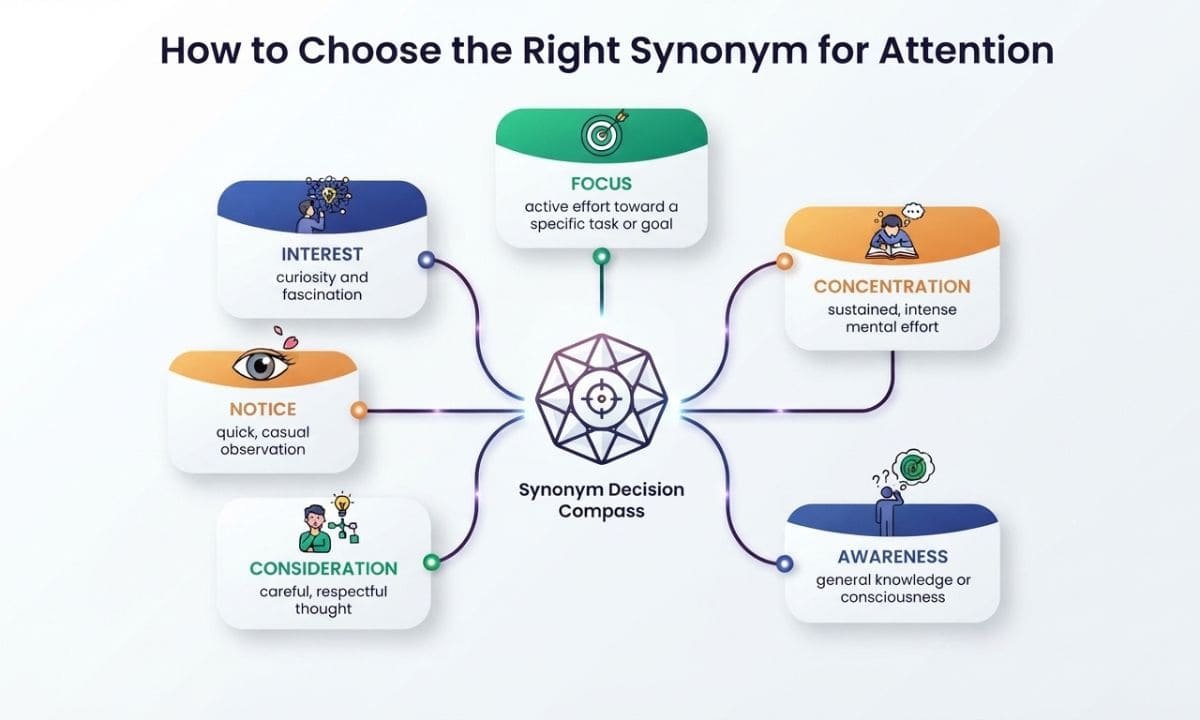
When to Use “Focus”
When someone is actively directing effort toward a specific task or goal.
When to Use “Concentration”
For sustained, intense mental effort, especially in academic settings.
When to Use “Awareness”
When describing general knowledge of something without active effort.
When to Use “Consideration”
In formal contexts where respectful, careful thought is involved.
When to Use “Notice”
For quick, casual observation of something.
When to Use “Interest”
When attention is driven by curiosity rather than obligation.
Attention vs Its Closest Synonyms
These quick comparisons show how attention differs from its nearest alternatives.
Attention vs. Focus
Attention can be passive; focus always implies active, directed effort.
Attention vs. Concentration
Attention can be brief; concentration implies sustained, effortful engagement.
Attention vs. Awareness
Attention is more active than awareness, which can exist without deliberate effort.
Attention vs. Notice
Notice is a quick, often unplanned moment of attention, not ongoing engagement.
Attention vs. Interest
Interest is attention driven by curiosity; attention itself can stem from obligation too.
Attention vs. Consideration
Consideration adds thoughtfulness and care that plain attention doesn’t require.
Common Mistakes When Using Attention Synonyms
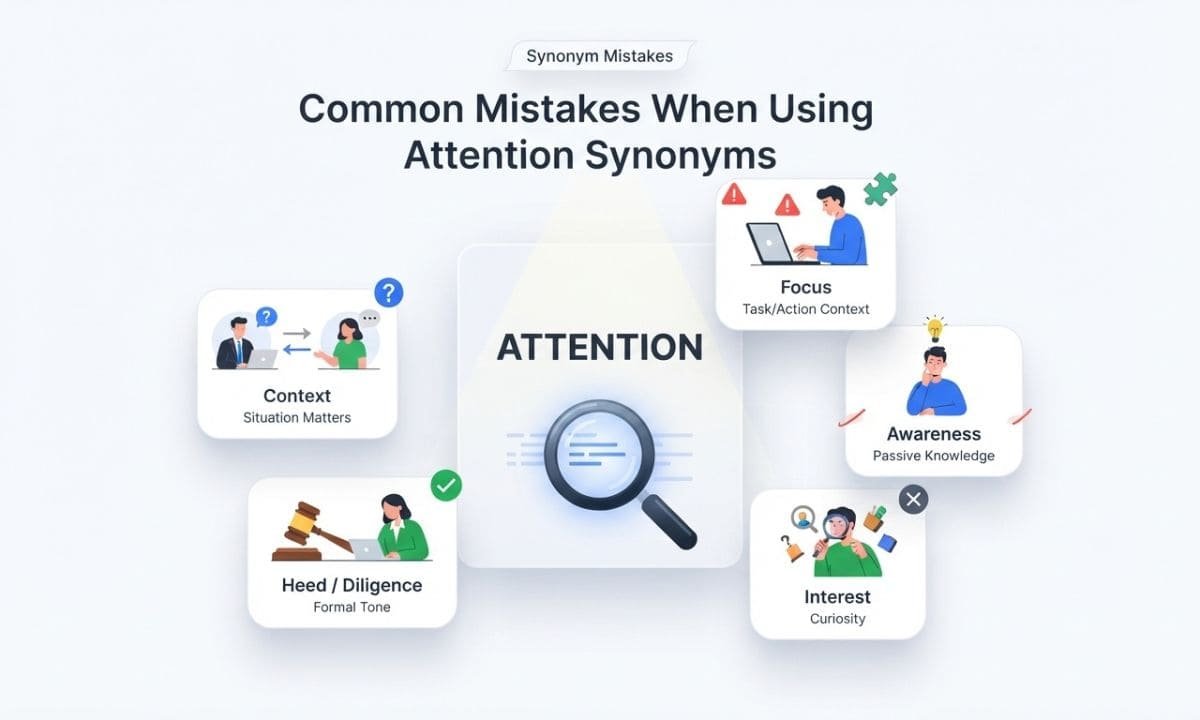
Choosing the wrong synonym can shift a sentence’s tone or meaning. Here’s what to watch for.
Using “Attention” When “Focus” Is More Natural
Attention can sound vague in task-driven sentences where focus fits better.
Confusing “Awareness” With “Attention”
Awareness is passive knowledge; attention involves actively directing the mind.
Using “Interest” as a Direct Replacement Everywhere
Interest implies curiosity, so it doesn’t fit contexts involving duty or obligation.
Using Formal Synonyms in Casual Conversations
Words like heed or diligence can sound stiff in everyday chat.
Choosing a Synonym Without Considering Context
The same word can shift meaning entirely depending on formal or casual use.
Best Attention Synonyms at a Glance
| Synonym | Best Meaning | Tone |
| Vigilance | Continuous watchfulness | Formal |
| Scrutiny | Critical examination | Formal |
| Mindfulness | Present-moment awareness | Neutral |
| Engrossment | Total immersion | Descriptive |
| Prominence | Visibility-driven attention | Neutral |
| Recognition | Attention as acknowledgment | Formal |
| Watchfulness | Alert observation | Neutral |
Attention Synonyms in Sentences
Seeing these attention synonyms in different contexts makes it easier to pick the right one for your own writing.
Attention in Everyday Examples
- “Pay attention to the road.”
- “She finally noticed the missed call.”
- “His focus drifted during the movie.”
Attention in Academic Examples
- “The study demands close observation.”
- “Her concentration improved test scores.”
- “The essay lacks application to the topic.”
Attention in Professional Examples
- “The client deserves our full consideration.”
- “He handled the audit with diligence.”
- “The report needs your prompt regard.”
Attention in Formal Examples
- “The committee gave the issue due consideration.”
- “Please heed the safety guidelines provided.”
- “The matter has come to our attention.”
What Is the Best Synonym for Attention?
Quick Answer:
There’s no single best synonym for attention, focus and concentration suit tasks, awareness and notice suit everyday observation, and consideration or regard suit formal contexts. The right choice always depends on tone and intent.
Explore More Synonyms Guide
25+ Struggle Synonyms: Better Ways to Say Struggle (With Examples)
25+ Share Synonyms: Meanings, Examples & When to Use Each
Additionally Synonyms: 20+ Words, Meanings, Examples & How to Use Them
Kindness Synonyms: 25+ Words, Meanings, Examples & How to Use Them
25+ Perspective Synonyms: Other Ways to Say Perspective (With Examples)
History Synonyms: 22+ Words, Meanings, Examples & How to Use Them
25+ Crazy Synonyms: Meanings, Examples, and How to Use Them
Frequently Asked Questions
What is the best synonym for attention?
Focus and awareness are the most versatile attention synonyms, though the best choice depends on context.
What is another word for paying attention?
“Focusing on,” “noticing,” or “concentrating on” all work well.
What is a formal word for attention?
Consideration, regard, and diligence are strong formal alternatives.
What is a synonym for attention in professional writing?
Consideration, regard, and diligence fit professional emails and reports.
What is a synonym for paying close attention?
Scrutiny, vigilance, and concentration all describe close attention.
What is the difference between attention and focus?
Attention can be passive or brief; focus always implies active, directed effort.
What’s a casual way to say attention?
Notice and interest work well in everyday, informal conversation.
Can “interest” always replace “attention”?
No interest implies curiosity, so it doesn’t fit situations involving duty.
Conclusion
Attention is one of those everyday words that quietly shapes tone, whether you’re writing a casual text or a formal report. Swapping it for the right synonym focus for tasks, awareness for general knowledge, consideration for respectful formality makes writing feel more precise and less repetitive. Keep this list of attention synonyms handy, match the word to the context, and your sentences will read more naturally every time.
