

Verbage or verbiage? Many writers stop and wonder. The word looks simple, but the spelling is tricky.
The correct choice is verbiage. In this guide on verbage or verbiage, you will learn the meaning, the sound, and the reason behind the mix-up.
Not sure about verbage or verbiage in an email or essay? You will get clear examples, easy memory tricks, and a short quiz.
Quick Answer: Verbage or Verbiage?
Verbiage is the correct spelling.
Verbage is a common misspelling.
In one line:
verbiage = the wording of something, or too many words.
What Does Verbiage Mean?
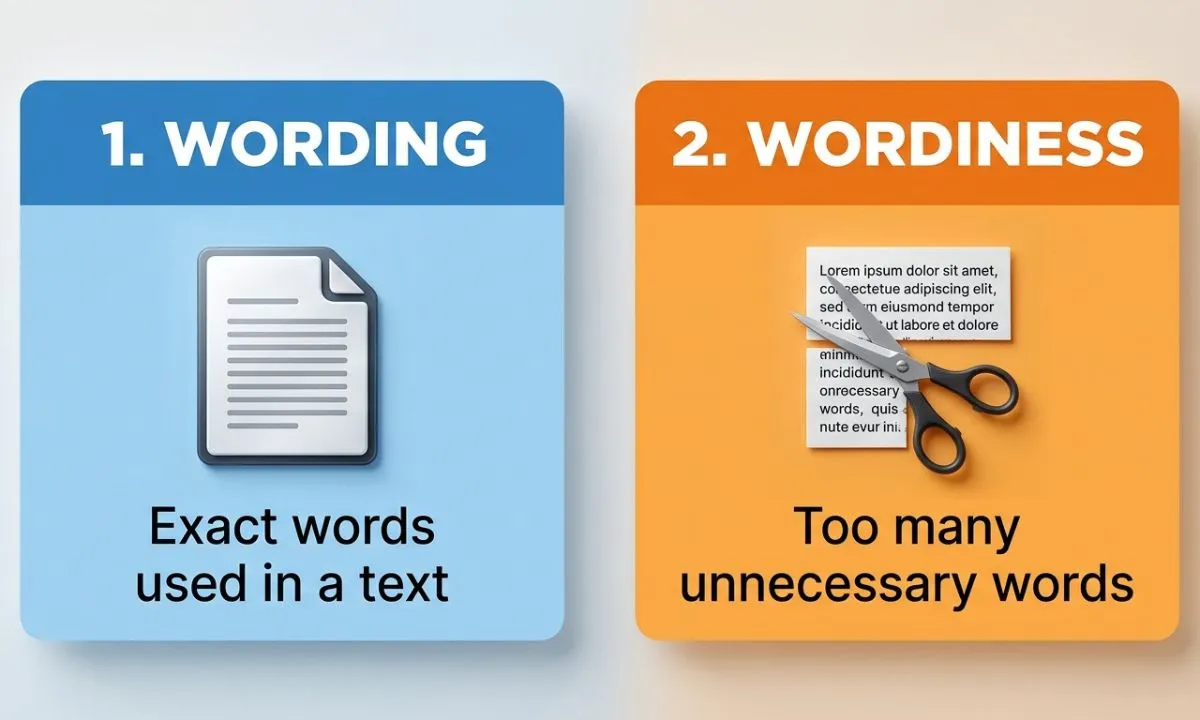
Verbiage is a noun.
It has two main meanings, and context tells you which one is meant.
Verbiage as “Wording” (Neutral Meaning)
Here, verbiage means the exact words used in a text.
- “Please check the verbiage on the warning label.”
- “Legal approved verbiage in the contract.”
Verbiage as “Too Many Words” (Negative Meaning)
Here, verbiage means wordiness, or words that add little.
- “Cut the verbiage and get to the point.”
- “The report was buried under pages of verbiage.”
Is Verbiage Formal or Informal?
Verbiage is neutral to slightly formal. You will see it in business, legal and editing talk.
Some writers see it as negative, so it can sound critical. Some style guides prefer wording for the neutral sense. When in doubt, use “wording” or “phrasing”.
Is Verbage a Real Word?
No. Verbage is a misspelling of verbiage. Grammarly calls it non-standard, and the Merriam-Webster entry lists only verbiage. Do not use it in formal writing.
Where you’ll see it:
- Quick texts and chat messages.
- Spell-check flags it with a red line.
- Social media posts and comments.
How to Pronounce Verbiage
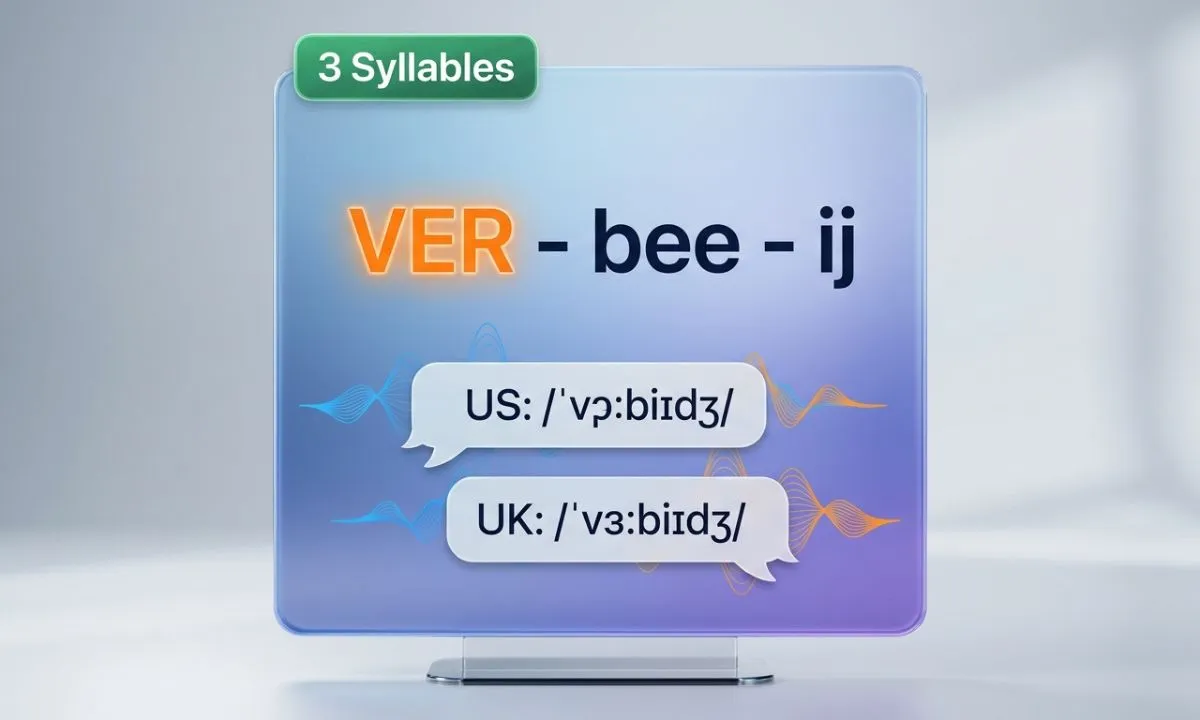
Respelling: VER-bee-ij (3 syllables, stress on the first).
- US: /ˈvɝːbiɪdʒ/
- UK: /ˈvɜːbiɪdʒ/
Many people say it fast as “VER-bij” (2 syllables). That shortcut is why “verbage” appears in writing.
Writing a word the way you say it quickly causes many errors, such as really vs realy.”
Why Do People Misspell Verbiage?
- The middle “i” gets dropped. In fast speech, the “bee” sound shrinks, so the “i” disappears.
- Other endings are confusing. Words like baggage, language and mileage have different “-age” endings. Writers copy the wrong pattern.
In fast speech the middle sound gets lost, the same way it does in volume vs volumn.”
Easy Tricks to Remember the Spelling
Syllable chant: VERB-I-AGE. Three beats, three parts.
The “-iage” family: foliage, carriage, marriage, verbiage. They all keep the “i”.
Extra i = extra words. The extra “i” matches the meaning of excess words.
Verb is hiding inside it. Spot “verb” at the start, then add -iage.
Say it in 3 beats before you write it.
- A short memory trick also helps with one-letter errors like barrel vs barrell.”
Better Alternatives to Verbiage
| Instead of | Try | Example |
| Verbiage (wording) | wording, phrasing, language | “Change the wording.” |
| Verbiage (excess) | wordiness, padding, fluff | “Remove the padding.” |
| Verbiage (formal text) | text, terms, language | “Review the terms.” |
Before: “In the event that you require assistance, please do not hesitate to contact us.”
After: “If you need help, contact us.”
Verbiage vs. Verbage: Side-by-Side Comparison
| Feature | Verbiage | Verbage |
| Spelling status | Correct | Common misspelling |
| Syllables | 3 (VER-bee-ij) | Usually said as 2 |
| Meaning | Wording / excess words | None (error for verbiage) |
| Dictionaries | Listed as standard | Not listed as a standard entry |
| Safe in formal writing? | Yes | No |
| Example | “The verbiage is unclear.” | ❌ “The verbage is unclear.” |
Verbiage vs. Related Words
| Word | Part of speech | Meaning | Example |
| Verbiage | Noun | Wording or excess words | “Too much verbiage.” |
| Verbose | Adjective | Using too many words | “A verbose report.” |
| Verbosity | Noun | Quality of being wordy | “His verbosity tired us.” |
| Verbal | Adjective | Spoken, or relating to words | “A verbal agreement.” |
| Wording | Noun | Choice of words (plain-English synonym) | “Change the wording.” |
Real-Life Examples of Verbiage
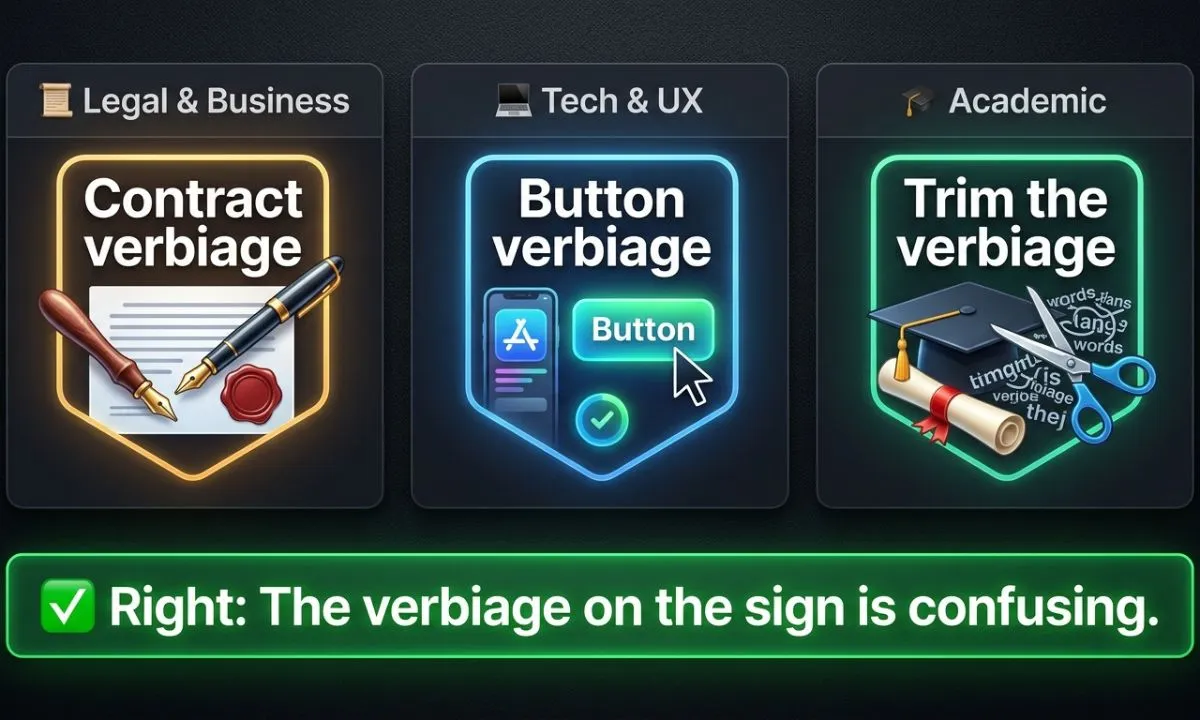
In Legal and Business Writing
- “The lease verbiage on late fees is confusing.”
- “HR updated the verbiage in the handbook.”
- “Please review the contract verbiage before signing.”
In School and Academic Writing
- “My teacher told me to trim the verbiage in my essay.”
- “The thesis introduction had too much verbiage.”
In Tech and UX Writing
- “We changed the button verbiage from ‘Submit’ to ‘Send message’.”
- “The error message verbiage should be short and friendly.”
In Everyday Speech and Social Media
- “I skipped the long post because of all the verbiage.”
- “Love the new app, but the verbiage feels stiff.”
Wrong vs. Right Sentences
| ❌ Wrong | ✅ Right |
| The verbage on the sign is confusing. | The verbiage on the sign is confusing. |
| Remove the extra verbage from your essay. | Remove the extra verbiage from your essay. |
| We need new verbage for the email. | We need new verbiage for the email. |
| His speech was full of verbage. | His speech was full of verbiage. |
| Please read the verbage carefully. | Please read the verbiage carefully. |
Common Mistakes with Verbiage
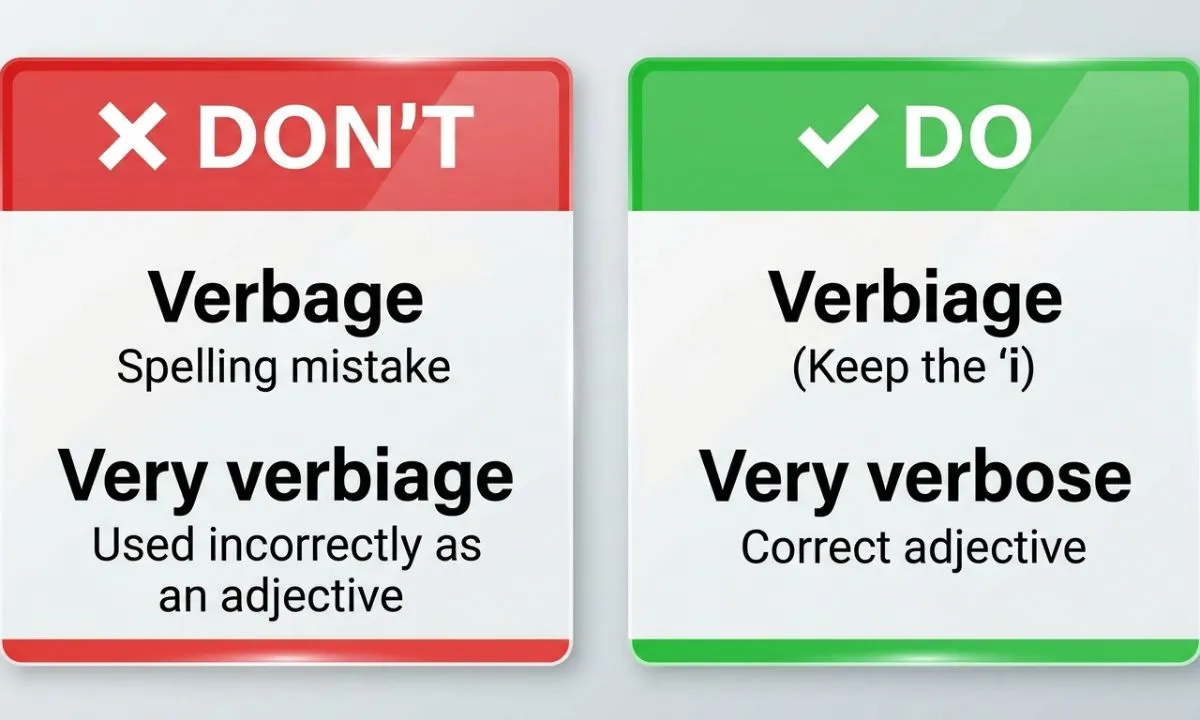
Spelling It “Verbage”
- ❌ “The verbage in the policy is outdated.”
- ✅ “The verbiage in the policy is outdated.”
- Why: The word has three syllables and an “i” in the middle.
This is a sound-based mistake, just like stutter vs studder.
Using “Verbiages” (Plural)
- ❌ “The contract had many verbiages.”
- ✅ “The contract had a lot of verbiage.”
- Why: Verbiage is usually uncountable. The plural “verbiages” is rare, so avoid it. Use “wordings” if you really mean separate versions.
Writing “A Verbiage”
- Less natural: “This is a confusing verbiage.”
- Better: “This is confusing verbiage.” or “This wording is confusing.”
- Why: Verbiage is mostly used without “a”. Not a true error, but it sounds odd.
Using “Verbiage” as an Adjective
- ❌ “The speaker was very verbiage.”
- ✅ “The speaker was very verbose.”
- Why: Verbiage is a noun. The adjective is verbose.
Mixing It Up with “Vocabulary”
- ❌ “She has a rich verbiage of travel terms.”
- ✅ “She has a rich vocabulary of travel terms.”
- Why: Verbiage is the wording used in a text. Vocabulary is the set of words a person knows.
Grammar Notes: Is Verbiage Countable?
Verbiage is a noun and is usually uncountable.
- Use: much verbiage, a lot of verbiage, some verbiage, less verbiage.
- For quantity, use phrases: a piece of verbiage, a bit of verbiage.
- Avoid: many verbiages, three verbiages.
Where Does the Word Verbiage Come From?
Verbiage entered English in the early 1700s from French. Etymonline traces it to the French verbier, “to chatter”. Merriam-Webster traces verbier to an older sense of “trill” or “warble”.
Many people link it to the Latin word verbum (“word”), which gave us verb, verbal and verbose. Some linguists treat that link as folk association rather than true descent, so it works best as a memory aid.
According to Merriam-Webster, the ‘wording’ meaning of verbiage is well established and standard
Explore More Grammar Guides
Stutter vs Studder: Correct Spelling and Meaning Guide in 2026
Anise vs Aniseed: Are They the Same? Find Out the Real Difference
Friend vs Freind: Common Mistake and Correct Usage Explained
Really vs Realy? A Quick Guide to Correct English Spelling (2026)
Volume vs Volumn: 1 Common Mistakes and Correct Usage Explained
Habit vs Habbit: Common Error, Meaning, and Usage Guide
Using vs Useing: Which Spelling Is Correct? Find Out Now
Divide vs Devide: Meaning, Examples, and Spelling Made Easy
Outing vs Outting: Common Mistakes and the Correct Usage Explained
Quick Summary Tips
- Always spell it verbiage.
- Say it with 3 syllables.
- It’s a noun and usually uncountable.
- Use verbose for the adjective.
- When unsure, choose wording.
Quick Test I Created
Practice Quiz: Test Yourself
Multiple choice
Which spelling is correct?
a) verbage b) verbiage c) verbaige
How many syllables does verbiage have?
a) 2 b) 3 c) 4
“Cut the verbiage” most likely means:
a) Add more detail b) Remove extra words c) Say it louder
Which is the adjective meaning “too wordy”?
a) verbiage b) verbal c) verbose
Error correction
“The verbage in the contract is confusing.”
“The report was full of verbiages.”
Fill in the blank
A ______ agreement is spoken, not written.
Please review the ______ on the warning label.
She gave a ______ speech that lasted two hours.
Rewrite
Shorten: “At this point in time, we are in receipt of your application.”
Answer key
Multiple choice
- b) verbiage. The only standard spelling.
- b) 3. VER-bee-ij.
- b) Remove extra words. Negative meaning: wordiness.
- c) verbose. Verbiage is a noun.
Error correction
- “We have received your application.” Sample answer; similar short versions are fine.
- “The verbiage in the contract is confusing.” Spelling fix.
Fill in the blank
- verbal. Spoken, not written.
- verbiage. Neutral meaning: wording.
- verbose. An adjective is needed.
Rewrite
- “We have received your application.” Sample answer; similar short versions are fine.
Frequently Asked Questions
Is verbage a word?
No. Verbage is a common misspelling of verbiage. Use verbiage in all writing.
What does verbiage mean?
Verbiage means the wording of something, or too many words. For example, “Check the verbiage on the label” is neutral, while “Cut the verbiage” is critical.
How do you pronounce verbiage?
Say VER-bee-ij, with three syllables and stress on the first. Saying it as “VER-bij” is why many people write “verbage”.
Is verbiage always negative?
No. It can simply mean wording, and Merriam-Webster treats that sense as established and standard. Because many readers hear it as negative, “wording” is safer when you want a neutral tone.
Can you say “verbiages”?
It is rare and usually avoided. Verbiage is normally uncountable, so write “a lot of verbiage” instead.
What is a simple synonym for verbiage?
For the neutral meaning, use wording or phrasing. For the negative meaning, use wordiness or padding.
Is verbiage correct on a resume or in business emails?
Yes, the spelling and use are correct, and you will often see it in business and legal writing. On a resume, a plainer word like “wording” or “language” often reads more clearly.
Conclusion
The correct spelling is verbiage, a three-syllable noun meaning wording or too many words. Remember the trick: the extra “i” means extra words. To go further, read our guide to verbose vs. verbal.spelling every time.
“Keep sharpening your writing with more grammar guides on Gramar Nesty.”
