

If you’ve ever paused mid-sentence wondering whether to write “two halves” or “two halfs,” you’re not alone. This is one of the most common spelling mix-ups in English, and it trips up native speakers just as often as learners. The confusion makes sense once you understand why it happens, but the fix is simple once you know the rule.
The short answer: “halves” is correct, and “halfs” is not a real word in standard English. This odd-looking rule comes from an old pattern in the language where certain nouns ending in “f” or “fe” change that ending to “v” before adding “es” in the plural form think “leaf” becoming “leaves,” “knife” becoming “knives,” or “wife” becoming “wives.” “Half” follows the same pattern, so it becomes “halves,” not “halfs.”
Once this rule clicks, using “halves” correctly becomes second nature in everyday writing, cooking, math, and conversation whether you’re splitting a bill in half, following a recipe that calls for “two halves of a lemon,” or explaining a math problem to a student. Keep an eye out for other “f-to-v” words like “shelf/shelves” and “wolf/wolves,” since they follow the same logic and can help reinforce the pattern in your memory.
Quick Answer: Halves vs Halfs
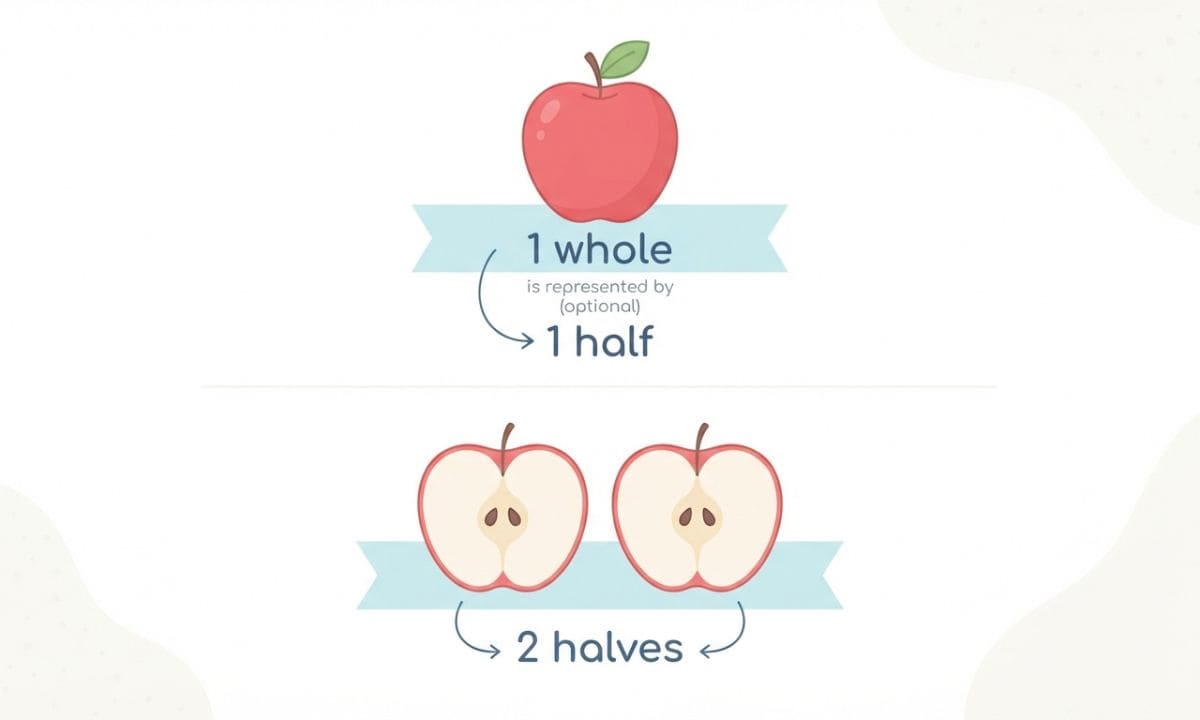
“Halves” is correct.
“Halfs” is not a standard English word.
“Half” is the singular form, and its plural is “halves.”
Halves Meaning and Definition
What Does “Halves” Mean?
“Halves” is the plural noun form of “half.”
It refers to two equal (or roughly equal) parts of something that has been divided.
Whenever you’re talking about more than one half, “halves” is the word you need.
Examples of Halves in Everyday English
She cut the orange into two neat halves.
Both halves of the cake were gone within minutes.
The twins split the inheritance into equal halves.
Half Meaning and Singular Form
What Does “Half” Mean?
“Half” refers to one of two equal parts of a whole essentially, 50% of something.
It’s mostly used as a noun, though it can also work as an adjective or an adverb depending on the sentence.
Example Sentences With “Half”
I only ate half of my sandwich.
Half the class stayed late for extra help.
The movie was only half as good as the book.
Pronunciation of Half and Halves
How to Pronounce “Half”
“Half” is pronounced with a soft “f” sound, roughly like “haf” (rhymes with “laugh” in American English).
How to Pronounce “Halves”
“Halves” is pronounced with a “v” sound, roughly like “havz” matching its spelling shift.
Why Pronunciation Can Cause Spelling Confusion
Because the sounds are close, especially in fast speech, writers sometimes default to what looks phonetically simpler which is part of why “halfs” keeps popping up.
Why Do People Confuse Halves and Halfs?
The Spelling Confusion
Most English nouns become plural by simply adding an “s” cat becomes cats, book becomes books.
So it feels natural to assume “half” would follow the same pattern and become “halfs.” That instinct is understandable, but it’s wrong for this particular word.
Why the “F” Changes to “V”
A group of English nouns ending in “f” or “fe” shift that final sound to a “v” sound before the plural ending is added. This isn’t random; it reflects how these words were pronounced historically, and the spelling simply followed the sound shift over time.
Why “Halfs” Looks Like a Logical Plural
“Halfs” isn’t a careless typo so much as a reasonable guess.
English pluralization has dozens of exceptions, and unless you’ve memorized this particular one, defaulting to “add an s” makes sense. It’s just not how the word actually works in standard usage.
The Grammar Rule Behind Halves
Why Half Becomes Halves
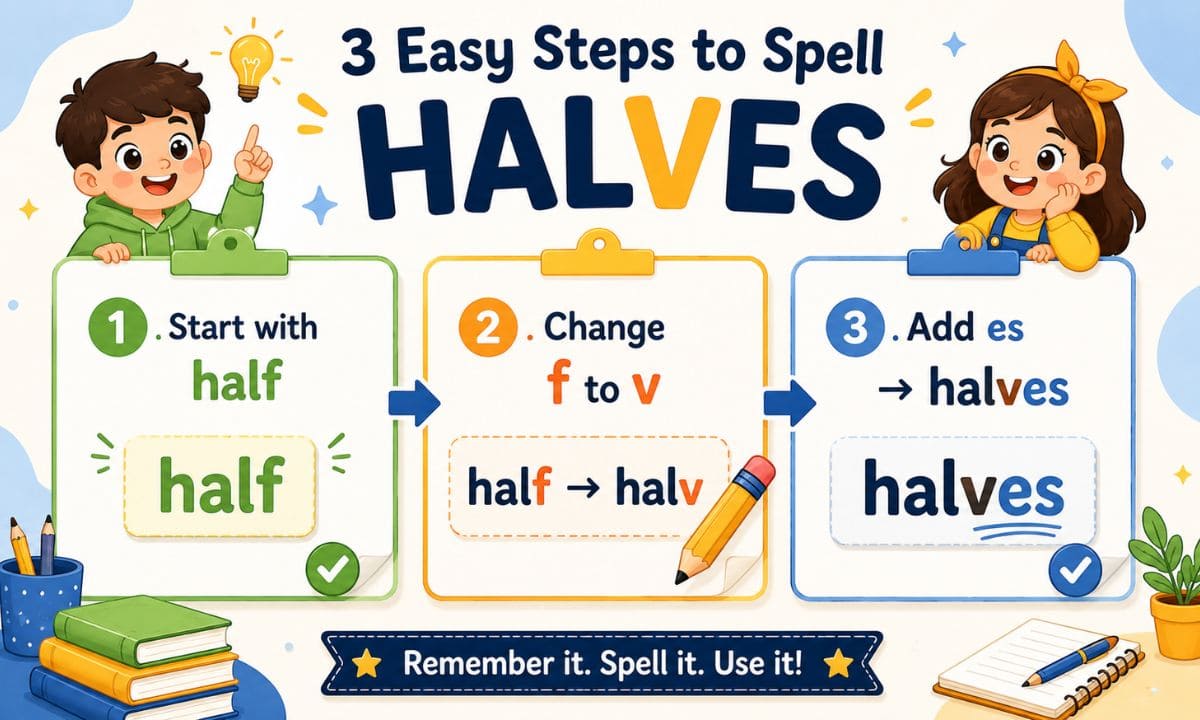
“Half” belongs to a small set of nouns that don’t follow the standard plural pattern.
Instead of adding “s” directly, the “f” is replaced with “ve” before the “s” goes on.
That’s how “half” becomes “halves.”
The Pluralization Rule for Words Ending in “-f”
Here’s the general pattern, though it does have some exceptions:
| Singular | Plural | Rule Applied |
| half | halves | f → ves |
| leaf | leaves | f → ves |
| shelf | shelves | f → ves |
| knife | knives | fe → ves |
| wolf | wolves | f → ves |
| roof | roofs | regular +s (exception) |
| chief | chiefs | regular +s (exception) |
| belief | beliefs | regular +s (exception) |
Other Words That Change “F” to “V”
Beyond “half,” you’ll see the same shift in words like calf (calves), life (lives), loaf (loaves), thief (thieves), and self (selves).
Learning “halves” alongside these related words makes the pattern much easier to remember.
Origin and Etymology of Half and Halves
Where Does the Word “Half” Come From?
“Half” traces back to Old English “healf,” meaning a side or part of something, which itself connects to older Germanic roots.
How Did the Plural “Halves” Develop?
As English evolved, certain final consonant sounds softened when followed by a vowel ending, which is how the “f” in “half” shifted to a “v” sound in its plural form.
Historical Changes in English Pluralization
This f-to-v shift isn’t unique to “half.” It reflects a broader historical pattern that also shaped words like “wife/wives” and “life/lives.”
When Is “Halfs” Ever Used?
Is “Halfs” a Correct English Word?
No. “Halfs” does not appear in any major dictionary as a standard plural. It’s considered a spelling error, not an accepted variant.
Standard English vs. Rare Usage
You might occasionally spot “halfs” used informally online, in gaming chat, or as a brand name but none of that makes it grammatically correct. In formal, academic, or professional writing, “halves” is the only acceptable choice.
Why You Should Usually Write “Halves”
Sticking with “halves” keeps your writing polished and error-free, whether you’re drafting an email, an essay, or a recipe. Readers and editors will notice “halfs” immediately, and it can undercut your credibility.
How to Use Halves in a Sentence
Halves as a Plural Noun
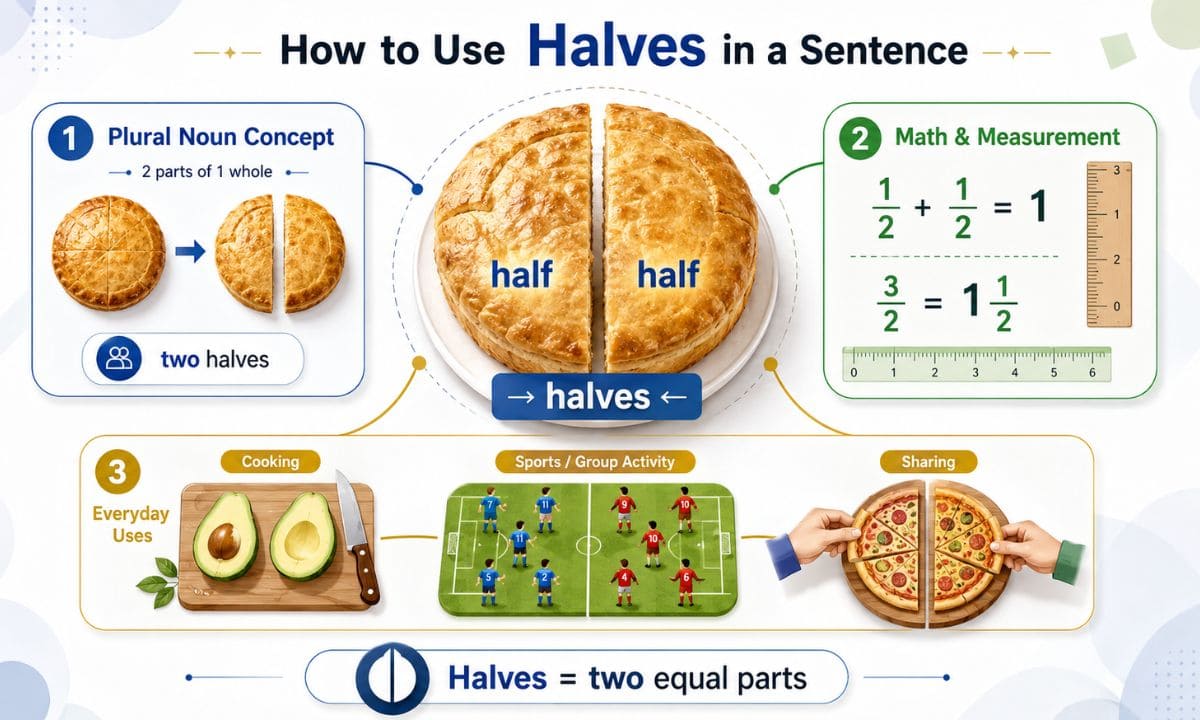
“Halves” always functions as a plural noun referring to two parts of something whole.
- Divide the dough into two halves before rolling it out.
Halves in Mathematical and Measurement Contexts
In math, “halves” is used constantly when discussing fractions, ratios, and division.
- Three halves equal one and a half.
- Add the two halves together to get the full measurement.
Halves in Everyday Situations
Beyond math, “halves” shows up in cooking, sports, sharing, and casual conversation.
Cutting Something Into Two Halves
- Slice the avocado into halves and remove the pit.
Dividing Something Into Equal Halves
- The teacher split the group into two halves for the debate.
Sharing Something Between Two People
We went halves on the pizza to save money.
Halves vs Half in Everyday English
When to Use “Half”
Use “half” when you’re talking about a single 50% portion of something.
When to Use “Halves”
Use “halves” when you’re referring to two or more of those parts together.
Singular vs. Plural Examples
| Sentence | Correct Form | Why |
| I ate ___ of the pie. | half | Refers to one part |
| Both ___ of the pie are gone. | halves | Refers to two parts |
| She gave me ___ a sandwich. | half | Singular amount |
| They split the bill into ___. | halves | Plural, two shares |
Halves vs Halfs at a Glance
| Feature | Halves | Halfs |
| Correct Spelling | ✅ Yes | ❌ No |
| Singular Form | Half | Half |
| Plural Form | Halves | N/A (incorrect) |
| Dictionary Status | Standard entry | Not recognized |
| Example Usage | “Two equal halves” | Not used in standard English |
Common Situations Where Halves Is Used
Food and Cooking
Recipes often call for cutting fruits, vegetables, or dough into halves.
Mathematics and Fractions
Halves represent one of the most basic fraction concepts kids learn.
Time and Measurements
“Half past” and measurement splits rely on this same base word.
Sports and Games
Many sports, like soccer and hockey, are literally divided into halves
Sharing and Division
“Going halves” on a cost is common everyday phrasing.
Halves in Everyday Sentences
Example Sentences With “Halves”
- The soccer match had two intense halves.
- Cut the bagel into halves before toasting it.
Incorrect Examples With “Halfs”
- ~~The soccer match had two intense halfs.~~
- ~~Cut the bagel into halfs before toasting it.~~
Correcting Common Sentence Mistakes
If you catch yourself typing “halfs,” pause and swap it for “halves” before you hit send or submit. It’s a quick fix once you’re aware of the rule.
Common Mistakes and Quick Fixes
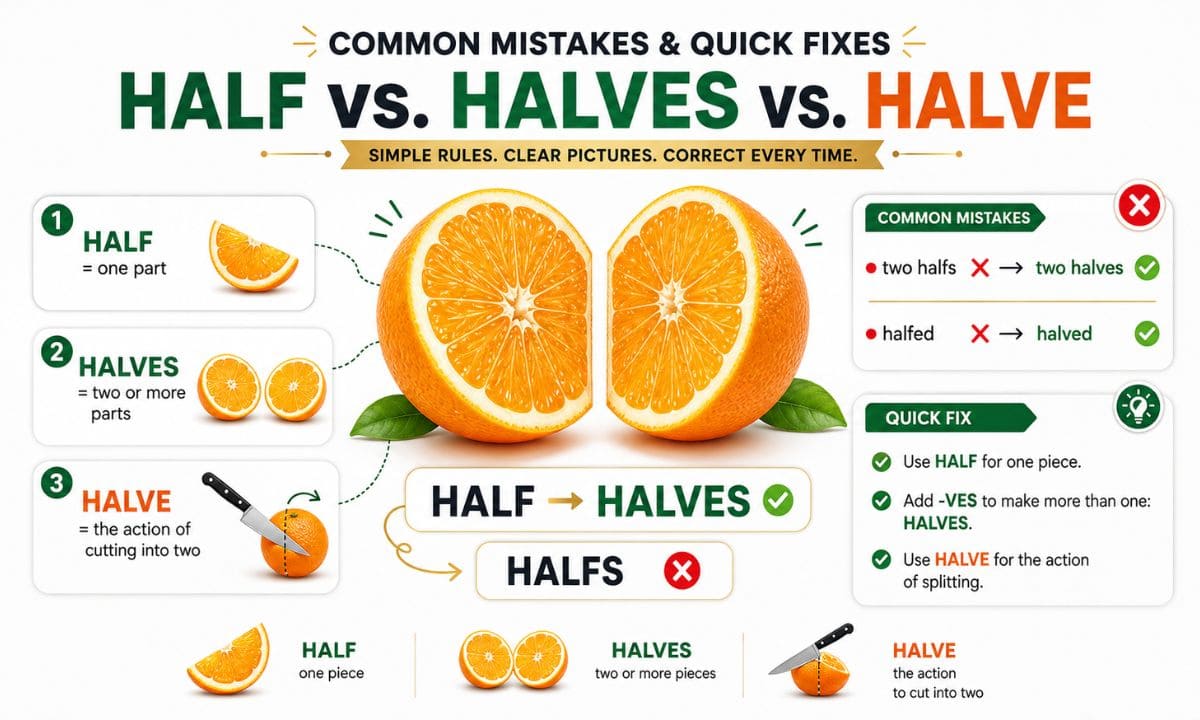
Mistake: Writing “Halfs”
This is the single most common error tied to this word. The fix is simple: always use “halves” for the plural, no exceptions.
Mistake: Confusing Half and Halves
Some writers use “halves” when they only mean one part, or “half” when discussing more than one. Match the word to whether you mean one part or two.
Mistake: Using the Wrong Plural Form
Occasionally, people also mix up “halves” with the verb “halve” (meaning to cut something in two). Remember: “halve” is an action, while “halves” is a noun or a verb conjugation, depending on context.
Quick Correction Examples
| Incorrect | Correct |
| Two halfs of the orange | Two halves of the orange |
| She halfed the recipe | She halved the recipe |
| Split into halfs | Split into halves |
Explore More Grammar Guides
Stutter vs Studder: Correct Spelling and Meaning Guide in 2026
Anise vs Aniseed: Are They the Same? Find Out the Real Difference
Friend vs Freind: Common Mistake and Correct Usage Explained
Really vs Realy? A Quick Guide to Correct English Spelling (2026)
Barrel vs Barrell: Correct Spelling, Meaning, and Sentence Examples
Customize vs Customise: Which One Should You Use? Complete Guide
Monkeys vs Monkies: Which One Should You Use in Formal English Writing?
Why Do People Misspell Halves as Halfs?
Pronunciation and Spelling Differences
When spoken quickly, “halves” can sound close enough to “halfs” that the misspelling feels intuitive, especially for non-native speakers still learning English sound shifts.
Applying Regular Plural Rules
Most learners are taught the “add s” rule first, so they apply it everywhere, including to exceptions like “half.”
Confusion With Other “-f” Words
Since some “-f” words (like “roof” or “chief”) do just add an “s,” it’s easy to assume “half” works the same way.
Fast Typing and Autocorrect
On mobile devices, autocorrect doesn’t always catch “halfs,” which lets the error slip through unnoticed.
Memory Tricks to Remember the Correct Spelling
The “F to V” Memory Trick
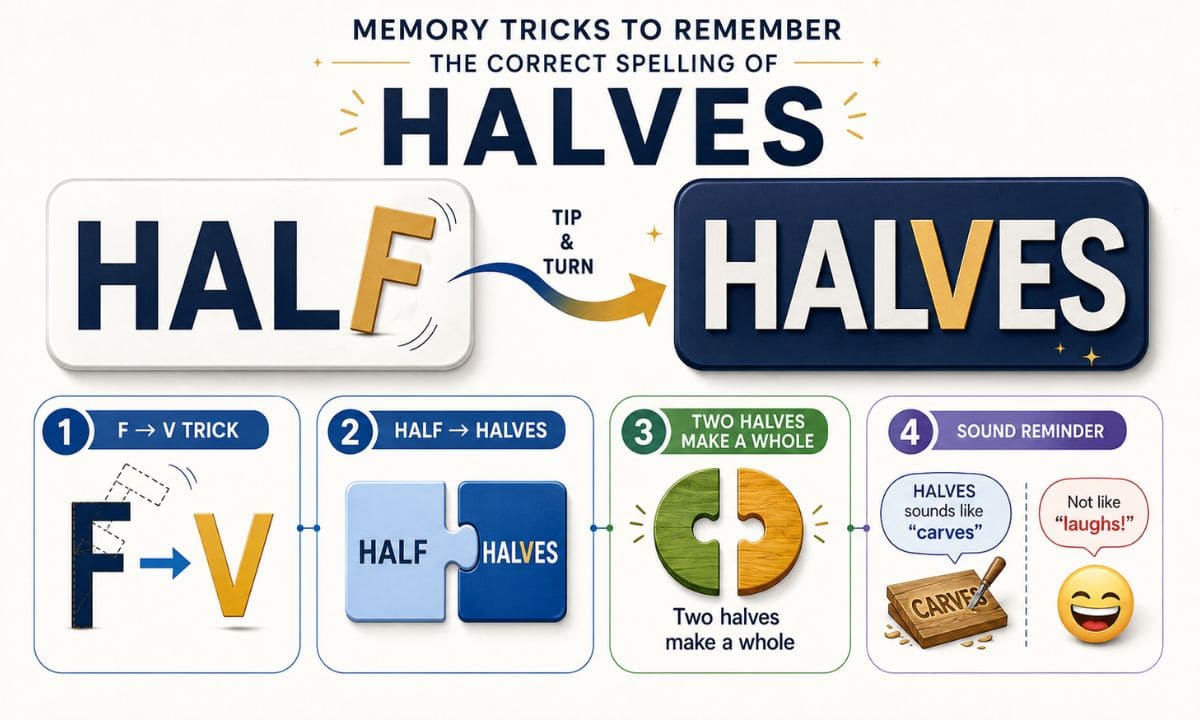
Picture the “f” physically tipping over into a “v” , a small visual cue that can help the spelling stick.
Think: Half → Halves
Pairing “half” with a word you already know follows the same pattern, like “leaf → leaves,” to reinforce the shift.
A Simple Sentence Test
Try saying “two halves make a whole” out loud a few times. Repetition of the correct form builds muscle memory faster than memorizing a rule.
Easy Spelling Reminder
If you’re ever unsure, just remember: halves rhyme with “carves,” not with “laughs.”
Different Parts of Speech Related to Half
| Word Form | Part of Speech | Example |
| Half | Noun | I ate half the cookie. |
| Half | Adjective | It was a half hour late. |
| Half | Adverb | The room was half empty. |
| Halves | Plural Noun | The oranges were split into halves. |
| Halve | Verb | Please halve the recipe. |
Synonyms and Alternatives for Half
Words Similar to Half
Portion, segment, and fraction can sometimes substitute for “half,” depending on context, though none carry the exact same 50% meaning.
Alternatives for “Half” in Formal Writing
In academic or technical writing, “one-half” or “50 percent” are often used for extra clarity.
Half vs. Portion vs. Section
“Portion” and “section” refer to a part of something without specifying the exact size, while “half” always means exactly (or approximately) 50%.
Opposite and Related Ideas
Half vs. Whole
A “whole” is the complete item; a “half” is one of its two equal parts.
Halves vs. Wholes
When two halves are joined back together, they form a whole again, a simple but useful way to picture the relationship.
Equal vs. Unequal Parts
Technically, “half” implies equal division. If parts aren’t equal, words like “portion” or “share” fit better.
American vs British English: Halves vs Halfs
Is “Halves” Used in American English?
Yes. American English follows the same rule as British English here “halves” is the standard plural in both.
Is “Halves” Used in British English?
Yes, and it’s used identically, including in idioms like “go halves on something.”
Does the Spelling Change by Region?
No. Unlike words such as “colour/color,” the halves vs halfs spelling doesn’t shift between American and British English. It’s “halves” everywhere.
Dictionary-Style Word Details
| Detail | Information |
| Word Type | Noun (also adjective/adverb) |
| Singular Form | Half |
| Plural Form | Halves |
| Definition | One of two equal parts of a whole |
| Common Usage | Math, cooking, sports, everyday sharing |
What Major Dictionaries Say About Halves
Every standard dictionary lists “halves” as the sole accepted plural of “half.” None list “halfs” as an alternate or informal spelling, which underlines just how settled this rule is.
Why “Halves” Is Preferred
Because it’s the only form recognized by dictionaries, style guides, and grammar checkers, “halves” is the safe, correct choice in any writing context.
Halves vs Halfs in Formal Writing
Which Form Should You Use in Academic Writing?
Always use “halves.” Academic writing is graded and reviewed closely, so spelling errors like “halfs” can cost you credibility and marks.
Which Form Is Appropriate for Professional Writing?
Professional documents, emails, and reports should also stick to “halves” ; it’s the standard expected by editors and readers alike.
Why Correct Pluralization Matters
Small spelling errors can distract readers from your message and make your writing look less polished, even when the content itself is strong.
Halves vs Halfs in Different Contexts
Halves in Mathematics
Used constantly in fractions, ratios, and division problems.
Halves in Cooking
Recipes frequently instruct cooks to cut ingredients into halves.
Halves in Time Expressions
Phrases like “half past six” build on the same root word.
Halves in Measurements
Construction, sewing, and DIY projects often reference halves of a unit.
Halves in General Conversation
“Let’s go halves” is common everyday phrasing for splitting a cost.
Pro Tip: How to Avoid Writing “Halfs”
Check the Singular Word First
Before pluralizing, confirm you’re starting from “half,” not a different word this keeps the transformation clear in your mind.
Apply the Correct Pluralization Rule
Swap the “f” for “v” and add “es.” That three-step mental check takes seconds and prevents the mistake entirely.
Use a Dictionary When Unsure
If you’re ever second-guessing yourself, a quick dictionary or spell-check lookup confirms “halves” every time.
Quick Test I Created
Quick Test: Halves or Halfs?
Fill-in-the-Blank Questions
- The apple was cut into two neat ___.
- I only wanted ___ of the sandwich.
- They split the profits into equal ___.
Choose the Correct Plural
- A) Halfs
- B) Halves ✅
Check Your Answers
If you picked “halves” for every blank above, you’ve got the rule down. If you’re still unsure, revisit the pluralization section above for a quick refresher.
Frequently Asked Questions
Is “Halves” the Correct Plural of “Half”?
Yes, “halves” is the only correct and dictionary-recognized plural of “half.”
Is “Halfs” a Word?
No, “halfs” is not a standard English word and is considered a spelling mistake.
Why Do Half Become Halves?
Because “half” belongs to a group of “-f” ending nouns that shift to “v” before adding the plural “es.”
What Is the Plural of Half?
The plural of “half” is “halves.”
Is “Halves” Correct in American English?
Yes, American English uses “halves” as the standard plural, just like British English.
Is “Halves” Correct in British English?
Yes, British English also uses “halves” as the only accepted plural form.
How Do You Remember the Spelling of Halves?
Link it to similar words like “leaf → leaves” or “knife → knives” to reinforce the f-to-v pattern.
What Are Two Halves Called?
Two halves together are simply called “a whole.”
What Is the Difference Between Half and Halves?
“Half” refers to one part of something divided in two, while “halves” refers to both parts together.
Can “Halfs” Ever Be Used Informally?
You might see it in casual online slang or branding, but it’s still not considered grammatically correct in standard writing.
Conclusion
The debate between halves vs halfs really comes down to one simple rule: “half” is singular, and “halves” is its only correct plural form. “Halfs” simply isn’t recognized by dictionaries, style guides, or grammar standards, no matter how logical it might seem at first glance.
Once you connect “half” to similar words like “leaf,” “knife,” and “wolf,” the f-to-v pattern becomes much easier to remember. This same rule applies consistently across American and British English, so there’s no regional exception to worry about.
Next time you’re splitting a bill, cutting a sandwich, or writing a math problem, you’ll know exactly which word to reach for. Keep “halves” as your default plural, double-check with a dictionary when in doubt, and your writing will stay clean, correct, and confusion-free.
