
Type the plural of “monkey” into any search bar and you’ll notice something odd: one version looks right, the other feels wrong, and most people can’t say why. The Monkeys vs Monkies debate pops up in classrooms, group chats, and even resumes, and it trips up native speakers just as often as English learners. Getting it right matters more than it seems, especially if you write for work, school, or an audience that judges credibility by small details.
This confusion usually comes from a mix-up with other plural rules in English, where words ending in “y” sometimes take “-ies” instead of a simple “-s.” That single crossed wire is exactly why the Monkeys vs Monkies question keeps showing up in grammar forums and spell-check debates. Once you see the pattern behind it, you’ll never second-guess it again.
This guide breaks down the Monkeys vs Monkies question from every angle spelling rules, dictionary entries, pronunciation, regional usage, and real sentence examples. By the end, you’ll know exactly which form belongs in a formal email, an academic paper, or a casual text, and why the other one never should appear at all.
Quick Answer: Monkeys vs Monkies?
“Monkeys” is the only correct spelling.
“Monkies” is a common misspelling with no standing in any English dictionary.
Monkeys: Meaning and Definition
What Does “Monkeys” Mean?
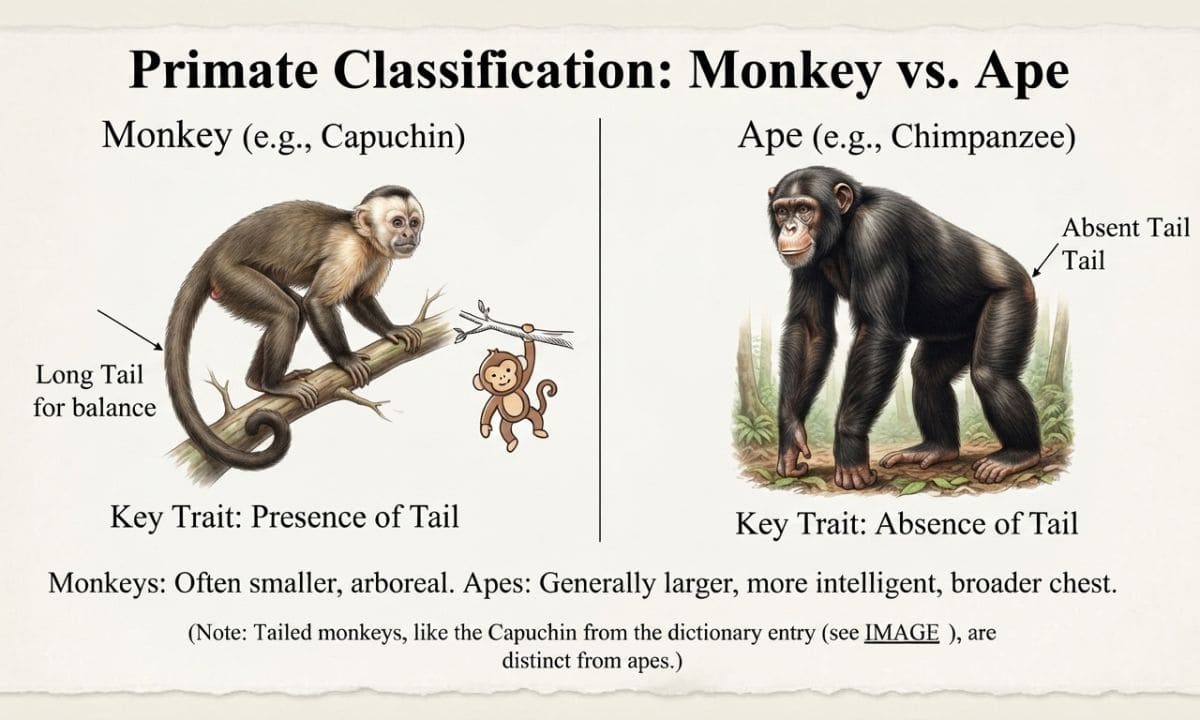
“Monkeys” refers to more than one member of a group of primates, typically smaller and often tailed, distinct from apes.
Monkey as a Singular Noun
“Monkey” (singular) names one individual primate, such as in “The monkey climbed the tree.”
Monkeys as a Plural Noun
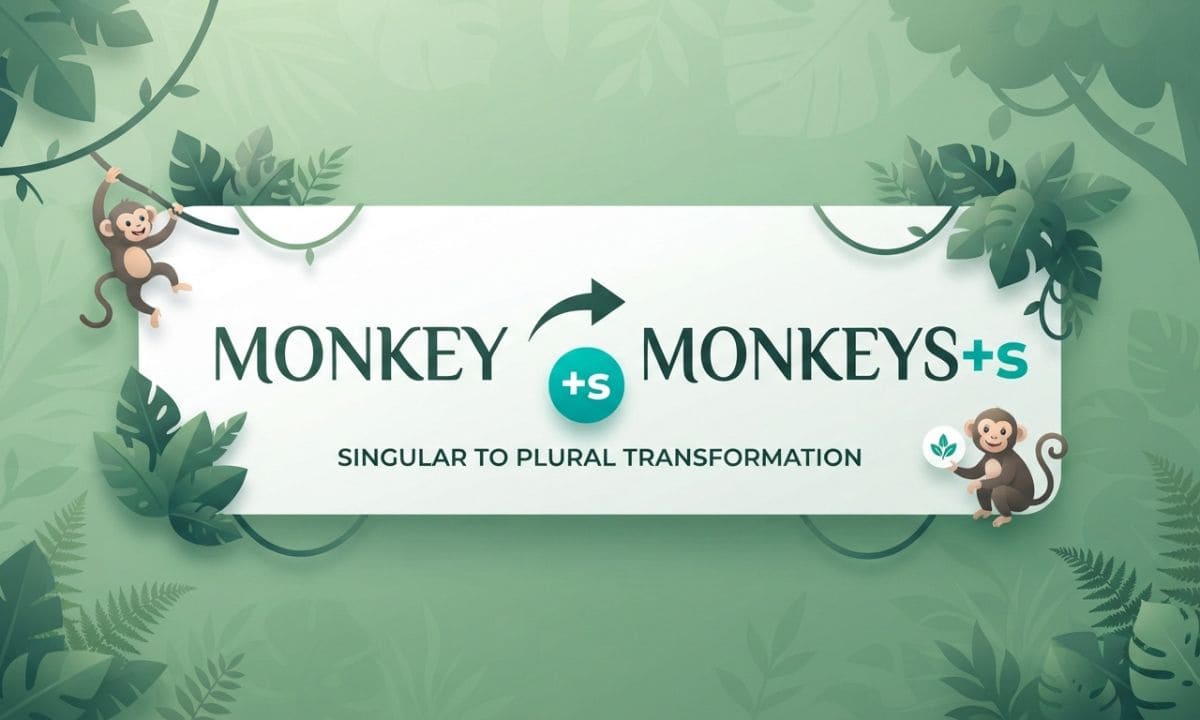
“Monkeys” (plural) refers to two or more of these primates, formed by adding a simple “s” to “monkey.”
Example Sentences With “Monkeys”
The zoo added three new monkeys to its primate house.
Wild monkeys often travel in troops for safety.
Researchers studied how monkeys use tools to find food.
Monkies: Is It a Correct Spelling?
Why “Monkies” Is Incorrect
“Monkies” wrongly applies the “y to ies” rule, which only fits words ending in a consonant plus “y” not “monkey.”
Is “Monkies” Ever Used in English?
No standard dictionary or style guide accepts “monkies” as a variant. It appears only as an error in casual writing.
Common Examples of the Misspelling
❌ “We saw some monkies at the sanctuary.”
❌ “Those monkies are so playful.”
✔️ Correct version: “We saw some monkeys at the sanctuary.”
The Grammar Rule Behind “Monkeys”
How to Pluralize Words Ending in Y
English splits words ending in “y” into two groups based on the letter directly before the “y” a vowel or a consonant.
When to Change Y to IES
If a consonant comes before the “y” (city, story, baby), drop the “y” and add “-ies”: cities, stories, babies.
When to Keep Y and Add S
If a vowel comes before the “y” (monkey, key, day), simply add “-s”: monkeys, keys, days.
Why “Monkey” Becomes “Monkeys”
“Monkey” ends in “e-y” a vowel plus “y” so it follows the simple “add s” rule, never the “ies” rule.
Monkeys vs Monkies: The Spelling Rule Explained
The Correct Spelling Pattern
Vowel + Y → add S.
This one pattern resolves the entire Monkeys vs Monkies debate on its own.
Monkey → Monkeys
Monkey ends in “ey,” so English grammar simply tacks on an “s,” producing “monkeys” nothing more complicated than that.
Why Monkey Does Not Become Monkies
Turning “monkey” into “monkies” would require dropping a vowel-based ending, which the rule never calls for.
Why Do People Misspell “Monkeys” vs “Monkies”?
Confusion With Words Ending in Consonant + Y
Writers unconsciously borrow the “ies” pattern from far more common words like “city” or “puppy.”
The “Y to IES” Rule
This rule is taught early and used often, so it sometimes gets applied to every “y”-ending word, including “monkey.”
Influence of Words Like “Cities” and “Stories”
Because “cities” and “stories” are so familiar, some writers assume “monkeys” should follow the same “ies” pattern.
Typing and Autocorrect Mistakes
Fast typing, muscle memory, and inconsistent autocorrect settings also contribute to the persistent “monkies” typo.
Monkeys vs Monkies at a Glance
| Feature | Monkeys | Monkies |
| Correct spelling | ✔️ Yes | ❌ No |
| Found in dictionaries | ✔️ Yes | ❌ No |
| Follows grammar rule | Vowel + Y → add S | Incorrectly applies Y → IES |
| Used in formal writing | ✔️ Always | ❌ Never |
| Common in casual typos | Rare | Frequent |
Monkeys in Formal and Informal Writing
Using “Monkeys” in Formal Writing
In reports, articles, and business documents, “monkeys” is the only acceptable spelling with no exceptions.
Using “Monkeys” in Academic Writing
Research papers on primatology, biology, or zoology use “monkeys” consistently across every major journal and textbook.
Using “Monkeys” in Everyday English
Conversational English, texting, and social captions also use “monkeys” ; informal tone doesn’t excuse incorrect spelling.
Should You Ever Write “Monkies”?
No. There’s no context formal, informal, creative, or technical where “monkies” is the accepted spelling.
Monkeys in Everyday Sentences
Simple Sentences With “Monkeys”
Monkeys swing from branch to branch with ease.
Some monkeys communicate through distinct vocal calls.
The children laughed at the monkeys’ antics.
Examples in Formal Writing
“The study observed twelve monkeys over a six-month period to assess behavioral patterns.”
Examples in Conversational English
“We watched the monkeys at the sanctuary for almost an hour!”
Common Sentence Patterns
Monkeys typically pair with verbs like climb, swing, forage, groom, and communicate in both writing and speech.
Common Mistakes and Quick Fixes
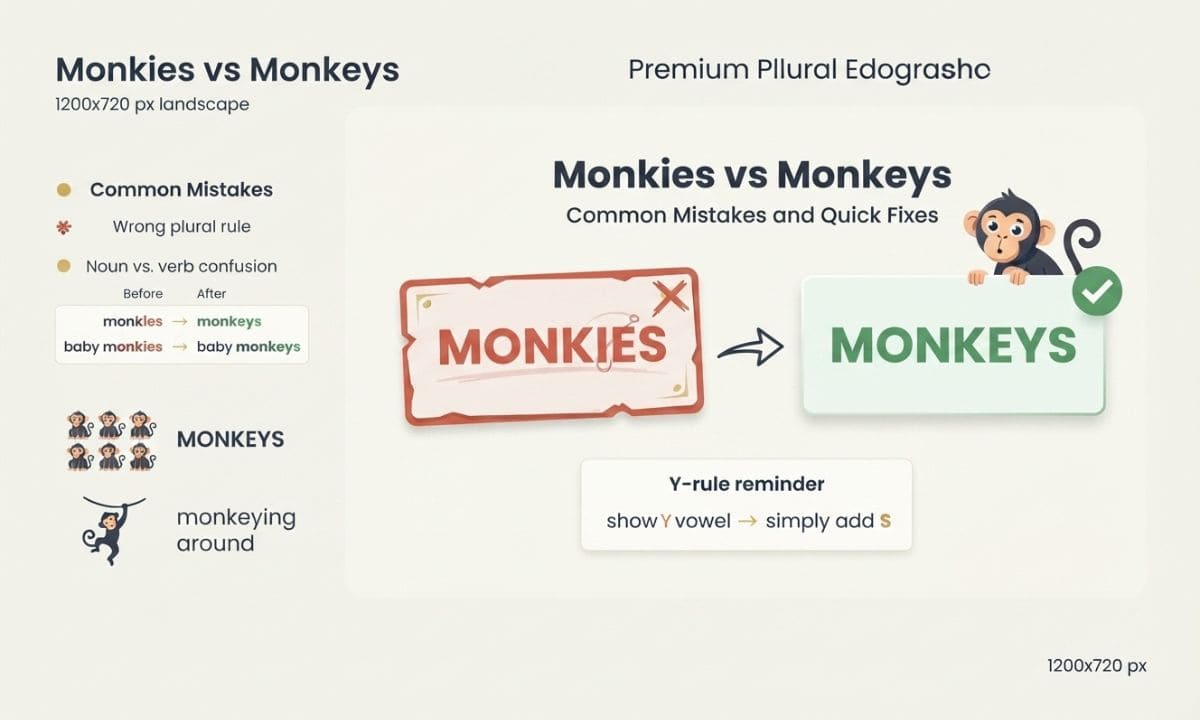
Mistake: Writing “Monkies”
Fix: Replace every instance of “monkies” with “monkeys” there’s no scenario where the former is correct.
Mistake: Applying the Wrong Plural Rule
Fix: Check the letter before the final “y.” A vowel means just add “s.”
Mistake: Confusing Noun and Verb Forms
“Monkey” can also act as a verb (“to monkey around”), which doesn’t affect the noun’s plural spelling.
Quick Correction Examples
| Incorrect | Correct |
| monkies | monkeys |
| monkies around | monkeying around |
| baby monkies | baby monkeys |
Different Forms of the Word “Monkey”
Monkey as a Noun
Refers to a single primate: “That monkey stole a banana.”
Monkeys as a Plural Noun
Refers to multiple primates: “The monkeys shared the fruit.”
Monkey as a Verb
Means to fiddle or tinker: “Stop monkeying around with the settings.”
Related Word Forms
Monkeyed (past tense),
monkeying (present participle)
monkey-like (adjective) all keep the same vowel-plus-y spelling logic.
Explore More Grammar Guides
Stutter vs Studder: Correct Spelling and Meaning Guide in 2026
Anise vs Aniseed: Are They the Same? Find Out the Real Difference
Friend vs Freind: Common Mistake and Correct Usage Explained
Really vs Realy? A Quick Guide to Correct English Spelling (2026)
Barrel vs Barrell: Correct Spelling, Meaning, and Sentence Examples
Customize vs Customise: Which One Should You Use? Complete Guide
Pronunciation of “Monkey” and “Monkeys”
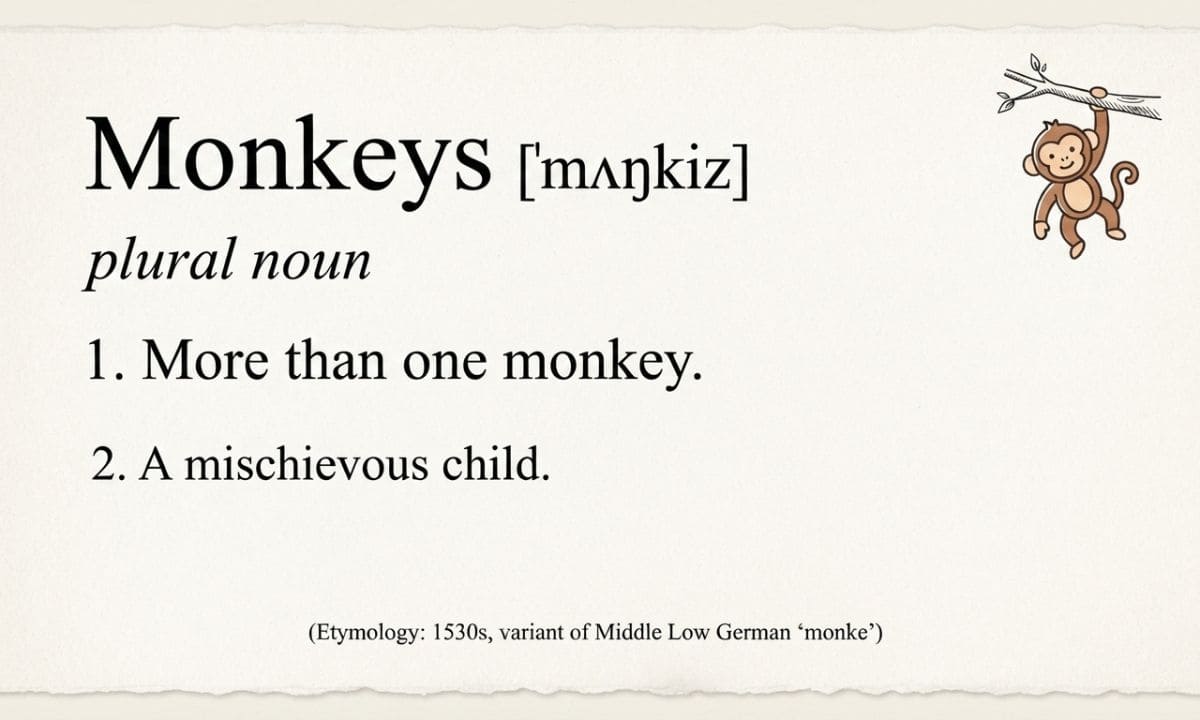
How to Pronounce “Monkey”
Pronounced /ˈmʌŋ.ki/ “MUHNG-kee,” with stress on the first syllable.
How to Pronounce “Monkeys”
Pronounced /ˈmʌŋ.kiz/ simply add a “z” sound at the end for the plural.
Does the Spelling Change the Pronunciation?
No. Even the incorrect “monkies” would sound identical to “monkeys” if spoken aloud the error is purely visual.
The Origin and Etymology of “Monkey”
Where Does the Word “Monkey” Come From?
Most etymologists trace “monkey” to “Moneke,” a character name in medieval fables, possibly linked to the Italian word for a female ape.
How the Plural Form Developed
As English standardized spelling rules, words ending in vowel-plus-y naturally settled on the simple “add s” plural including “monkey.”
Historical Use of “Monkey”
The word entered common English usage by the 16th century and has kept its spelling and plural form largely unchanged since.
American vs British English: Monkeys vs Monkies?
Is “Monkeys” Used in American English?
Yes. American dictionaries and style guides list only “monkeys” as correct.
Is “Monkeys” Used in British English?
Yes. British English follows the identical pluralization rule, with no regional variation.
Does British English Use “Monkies”?
No. Neither American nor British English recognizes “monkies” as a legitimate spelling.
What Major Dictionaries Say
“Monkey” in Major English Dictionaries
Merriam-Webster, Oxford, Cambridge, and Collins all define “monkey” as a noun for a non-ape primate.
What Dictionaries Say About the Plural “Monkeys”
Every major dictionary lists “monkeys” as the standard plural, with zero alternate spellings listed.
Is “Monkies” Listed as a Standard Word?
No dictionary print or digital includes “monkies” as a recognized entry or variant.
Dictionary-Style Word Details
| Word | Part of Speech | Singular Form | Plural Form | Pronunciation | Meaning | Correct Spelling |
| Monkey | Noun | Monkey | Monkeys | /ˈmʌŋ.ki/ | A tailed primate, excluding apes | Monkeys |
Monkeys: Synonyms and Related Terms
General Terms for Monkeys
Primates
Simians
apes (informally
though technically inaccurate
Scientific and Zoological Terms
Old World monkeys
New World monkeys
Cercopithecidae and Platyrrhini describe specific monkey families.
Related Animal Words
Chimpanzees, gorillas, and orangutans are apes, not monkeys, a common point of confusion in casual speech.
When “Monkies” Looks or Sounds Wrong
In Formal Documents
A single “monkies” typo in a report or proposal can undercut an otherwise polished document.
In School and Academic Writing
Teachers and professors consistently mark “monkies” as a spelling error on essays and exams.
In Professional Communication
Emails, presentations, and marketing copy should always use “monkeys” to maintain credibility.
In Search Queries and Online Writing
Even search engines recognize “monkies” as a misspelling and typically suggest “monkeys” instead.
Memory Tricks to Remember “Monkeys”
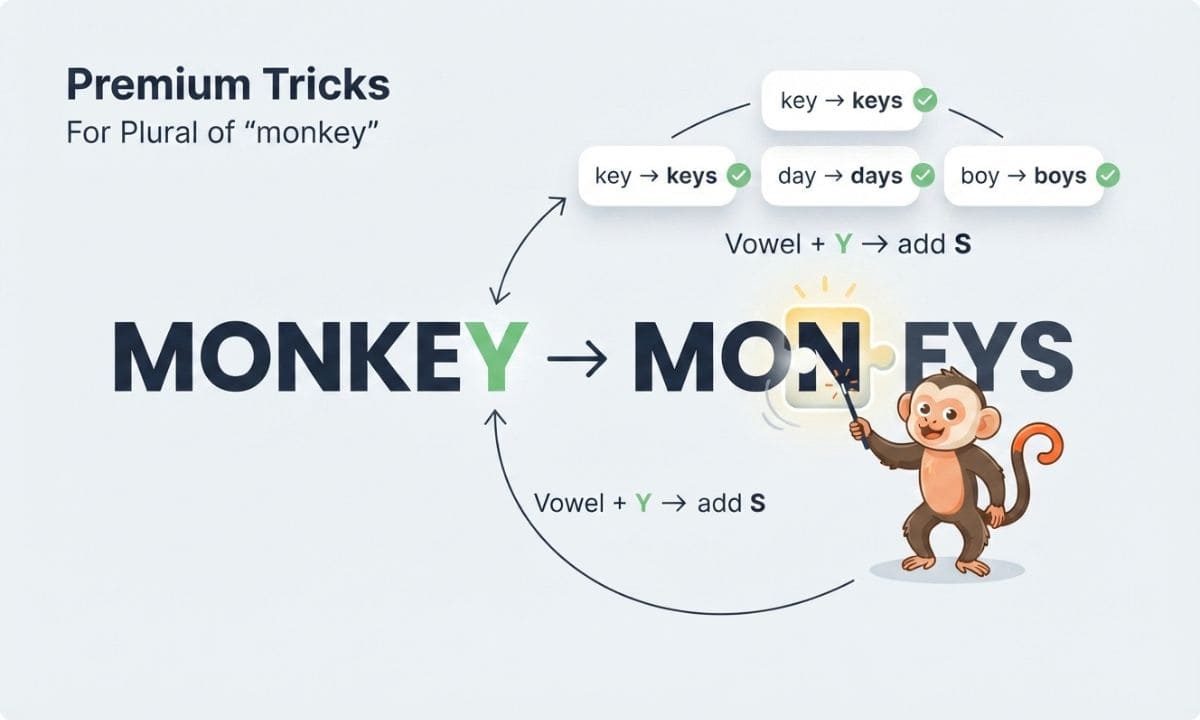
Remember: Monkey + S
The easiest trick: just add “s” to “monkey” no letters change, no rules to overthink.
The Simple “Vowel Before Y” Trick
If a vowel (a, e, i, o, u) sits right before the “y,” always just add “s”: monkeys, keys, days, boys.
A Quick Spelling Test
Say the word slowly: “mon-KEY.” Since it ends in a vowel sound before “y,” it simply takes an “s.”
Expert Tip: How to Avoid This Spelling Mistake
Check the Letter Before Y
Before pluralizing any “y”-ending word, glance at the letter right before it vowel or consonant.
Apply the Correct Plural Rule
Vowel before y → add “s.” Consonant before y → change to “ies.” This one check prevents most spelling slip-ups.
Use a Dictionary When Unsure
When in doubt, a quick dictionary search settles it instantly “monkeys” will always be the listed form.
Quick Test I Created
Monkeys vs Monkies: Quick Test
Which Sentence Is Correct?
“The monkeys played in the trees” or “The monkies played in the trees”? The first is correct.
Fill-in-the-Blank Test
“Three ______ climbed onto the branch.” (Answer: monkeys)
Answer and Explanation
“Monkeys” is correct because “monkey” ends in a vowel plus “y,” so it simply takes an “s.”
Frequently Asked Questions
Is “Monkeys” the Correct Spelling?
Yes, “monkeys” is the only correct and dictionary-recognized plural of “monkey.”
Is “Monkies” a Word?
No, “monkies” is a misspelling and does not appear in any standard English dictionary.
Why Is “Monkeys” Not Spelled “Monkies”?
Because “monkey” ends in a vowel plus “y,” it follows the “add s” rule, not the “y to ies” rule.
What Is the Plural of “Monkey”?
The plural of “monkey” is “monkeys.”
Do You Change Y to IES in “Monkey”?
No, that rule only applies when a consonant comes before the “y,” which isn’t the case in “monkey.”
Is “Monkeys” Correct in American English?
Yes, American English uses “monkeys” exclusively, with no accepted alternative.
Is “Monkeys” Correct in British English?
Yes, British English follows the same rule and also uses “monkeys.”
Can “Monkies” Be Used in Formal English?
No, “monkies” should never appear in formal, academic, or professional writing.
How Do You Remember the Spelling of “Monkeys”?
Just remember: vowel before “y” means add “s” monkey becomes monkeys, nothing else changes.
Do Other Words Like “Key” or “Donkey” Follow the Same Rule?
Yes, “key,” “donkey,” and “turkey” all end in vowel plus “y,” so they simply add “s”: keys, donkeys, turkeys.
Conclusion
The Monkeys vs Monkies question comes down to one clear rule: “monkey” ends in a vowel plus “y,” so its plural simply adds an “s.” There’s no dictionary, style guide, or grammar authority American or British that recognizes “monkies” as valid. “Monkeys” is correct everywhere, from casual conversation to formal academic writing.
Understanding why this happens makes the rule easy to apply elsewhere too. Words like “key,” “donkey,” and “turkey” follow the identical pattern, while words like “city” and “baby” follow the opposite “y to ies” rule because they end in a consonant plus “y.” Once that distinction clicks, the Monkeys vs Monkies mix-up disappears for good.
Next time you’re unsure, just check the letter before the final “y.” If it’s a vowel, add “s” and move on with confidence. Skip “monkies” entirely in emails, essays, or everyday writing, “monkeys” is always the spelling that belongs.
