

Looking for a good to hear synonym that fits the moment? This guide gives you 60 other ways to say “good to hear,” plus practical good to hear alternatives, sorted by tone: professional, warm, casual, and relieved. You will also find a side-by-side comparison with similar phrases, real email and chat examples, memory tricks, common mistakes, and a short quiz.
Good to Hear Synonyms at a Glance
- Best all-round alternative: “Glad to hear that.”
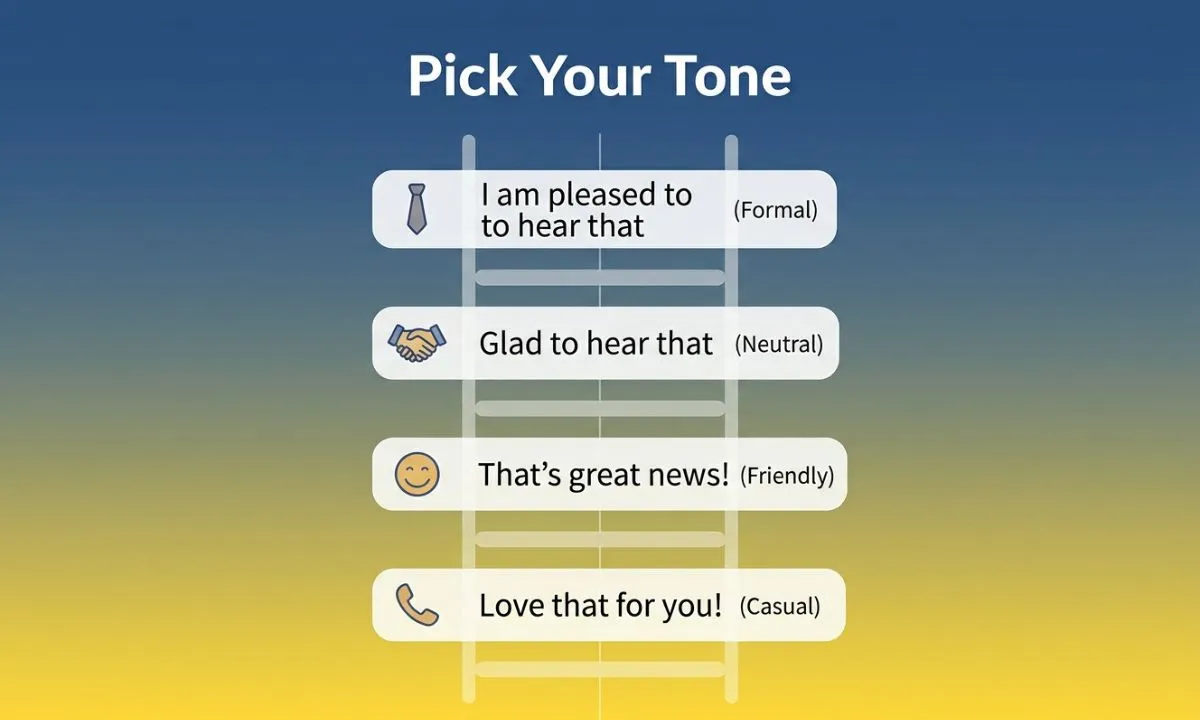
- Best formal or professional: “I am pleased to hear that.”
- Best casual: “That’s awesome!”
- Best when a worry ends: “That’s a load off my mind.”
- How to choose: check the kind of news, your relationship with the person, and the channel (spoken, email, or text).
Quick answer:
The best synonym for “good to hear” depends on tone. Another way to say good to hear should match the situation.
Use “I am pleased to hear that” in formal emails, “glad to hear it” in everyday conversation, “That’s awesome!” with friends, and “That’s a relief” when the news ends a worry. Match the phrase to your audience and to the type of news.
What Does “Good to Hear” Mean?
“Good to hear” is a polite, friendly phrase you use to react to positive news, updates, or relief that someone has shared. It tells the other person, “Your news makes me feel pleased.” It is common in conversation, texts, and informal workplace messages.
Grammar Breakdown for Learners
- Conversational ellipsis: The full sentence is “That is good to hear.” In casual speech we drop the subject and verb and keep only “(That’s) good to hear.”
- Core structure: adjective (good) + to-infinitive complement (to hear). The same pattern works with other feeling words: glad to hear, happy to hear, pleased to hear.
- Two kinds of objects: You can hear news (“good to hear that you passed”) or a person’s voice (“good to hear your voice”).
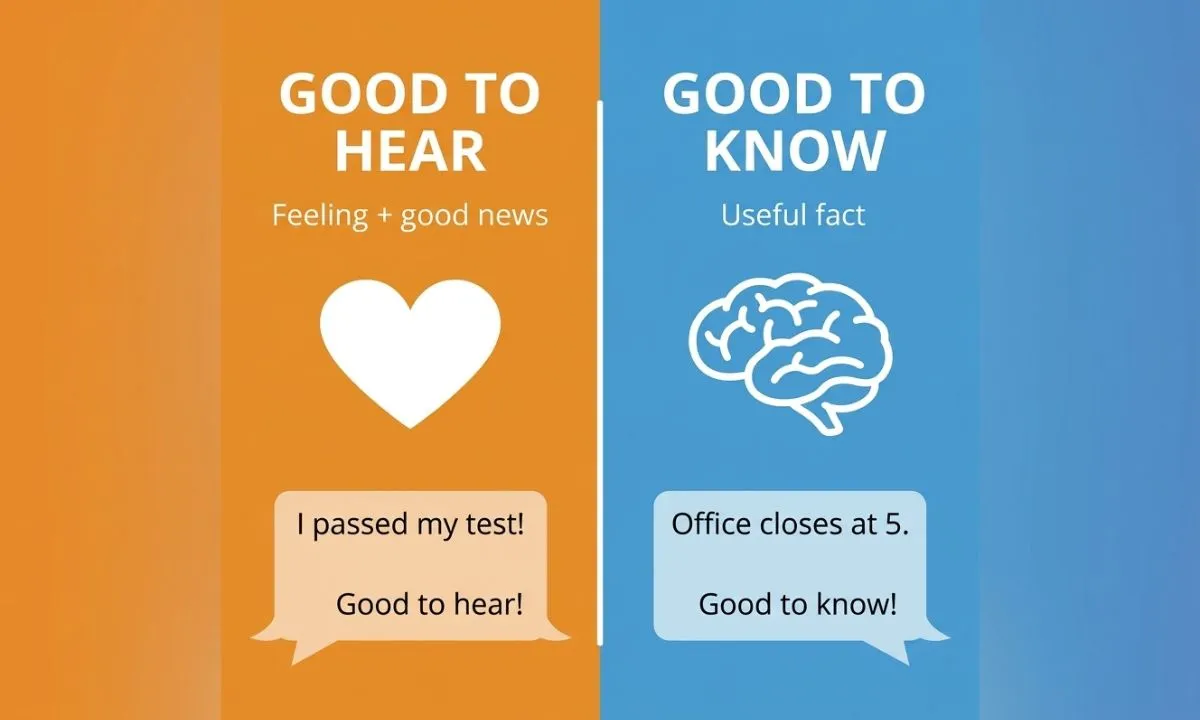
💡 Quick Rule of Thumb: Use “good to hear” when you react to news that makes you feel relieved, pleased, or satisfied. For purely neutral facts, use “good to know” instead.
Also Read This: Other Confusing word
“Good to Hear” vs. Similar Expressions: Side-by-Side Comparison
Learners often mix these phrases up because they share the same “good to…” pattern. The table shows what each one focuses on.
| Expression | Primary focus | Best used for | Example |
| Good to hear | Emotional reaction to positive news | Achievements, recoveries, good updates | “I passed my driving test!” — “That’s good to hear!” |
| Good to know | Practical information | Schedule changes, policy updates, instructions | “The office closes early on Friday.” — “Good to know!” |
| Good to see | Seeing someone or something | Meeting in person, visible progress | “Good to see you at the office today!” |
| Good to read | Written messages | Reports and updates you have just read | “It was good to read your positive quarterly summary.” |
| Glad to hear from you | Contact after a gap | A call or email after a long silence | “Hi John, I’m so glad to hear from you after all these months.” |
Note: “Good to read” is correct but less common than “good to hear.” Many people still write “good to hear” when reacting to news in an email.
Professional Ways to Say “Good to Hear” in Emails and Business
If you need professional ways to say good to hear, formal ways to say good to hear, or want to know how to say good to hear professionally, these phrases keep your tone polite and confident.
Top Professional and Workplace Alternatives
“I am pleased to hear that…” (formal, executive).
Example: “I am pleased to hear that the client approved the final proposal.”
“Thank you for the update — that is wonderful news.” (polite, client-facing).
Example: “Thank you for the update. That is wonderful news regarding the launch date.”
“I appreciate you sharing that positive update.” (collaborative, team).
Example: “I appreciate you sharing that update; it gives the whole team confidence.”
“That is encouraging progress.” (management, project tracking).
Example: “Moving the testing phase forward by a week is encouraging progress.”
“I was delighted to learn that…” (written correspondence).
Example: “I was delighted to learn that your department exceeded its annual target.”
“That is reassuring news.” (risk and problem resolution).
Example: “The audit found no issues, which is reassuring news for everyone involved.”
Real-Life Workplace Email Examples
Example 1: Client communication (formal)
Dear Mr. Davis, Thank you for sending over the revised contract. I am pleased to hear that all terms have been agreed upon. We will proceed with onboarding.
Example 2: Team Slack or Teams message (semi-formal)
Thanks for the heads-up on the server fix, Sarah! That is great news I’ll let the product team know we’re clear to launch.
Also Read This: Carmel vs Caramel
Casual and Conversational Ways to Say “Good to Hear”
For friends, family, and relaxed teammates, these casual ways to say good to hear sound natural and warm, and they are the other ways to say good to hear you will use most. They are also the different ways to say good to hear that work best in texts.
Daily Spoken and Texting Alternatives
- “That’s awesome!” — upbeat and friendly.
- “Phew, what a relief!” — empathetic, shares the tension that is now gone.
- “Awesome, good to know!” — a quick text reaction to useful, pleasant news.
- “I’m so happy for you!” — personal milestones.
- “That’s fantastic!” — high energy.
- “Glad to hear it!” — the natural, everyday baseline.
- “Love to hear that!” — modern, informal, common in messages.
Real-Life Conversational Dialogues
Dialogue 1: Friendship and personal support
Friend A: “My doctor said my ankle is completely healed!” Friend B: “Oh, phew, what a relief! I was so worried about your trip.”
Dialogue 2: Casual workplace check-in
Colleague A: “Just finished all 50 bug reports!” Colleague B: “That’s awesome! Take a well-deserved coffee break.”
Also Read This: Carmel vs Caramel
Jump to a synonym
1. Professional and Business Formal
- I am pleased to hear that.
- I am delighted to hear this news.
- I am gratified to hear that.
- I was delighted to learn that…
- Thank you for the update; that is wonderful news.
- I appreciate you sharing this positive update.
- That is encouraging progress.
- That reflects excellent progress.
- It is reassuring to receive this news.
- That is a welcome development.
- I am delighted by this outcome.
- It is gratifying to see these results.
- That is excellent news for the team.
- Congratulations on reaching this milestone.
- I am glad to learn that everything is on track.
2. Warm and Supportive Personal
- I’m thrilled for you.
- That makes me so happy.
- What wonderful news for you!
- I’m so happy for you!
- You deserve this.
- That’s such lovely news.
- That’s lovely to hear.
- You’ve made my day.
- That’s music to my ears.
- I couldn’t be happier for you.
- That warms my heart.
- You must be so proud.
- I’m really glad you told me.
- I’m over the moon for you.
- It’s so good to see things going well for you.
3. Short and Casual for Texting
- Great news!
- Sweet!
- Love that for you!
- Glad it worked out!
- That’s great!
- That’s awesome!
- Nice one!
- Yay!
- Awesome, good to know!
- That’s fantastic!
- Glad to hear it!
- Love to hear that!
- Brilliant!
- So happy for you!
- That’s a win!
4. Expressing Relief and Comfort
- That’s a load off my mind.
- I’m so relieved to hear that.
- That brings great comfort.
- Glad to know all is well.
- Phew, what a relief!
- Thank goodness!
- That puts my mind at ease.
- I can breathe easier now.
- That must be such a weight off your shoulders.
- I’m so glad you’re okay.
- I’m so glad to hear you’re feeling better.
- It’s comforting to know you’re safe.
- I’m relieved everything turned out well.
- Thank goodness for that.
- I’m so glad that’s all settled.
1. I am pleased to hear that.
Pronunciation: US /aɪ æm ˈpliːzd tə ˈhɪr ðæt/ | UK /aɪ æm ˈpliːzd tə ˈhɪə ðæt/
Meaning: Means you feel glad about news you have just received, in a formal tone.
Examples:
- I am pleased to hear that the audit is complete.
- I am pleased to hear that you accepted the offer.
2. I am delighted to hear this news.
Pronunciation: US /aɪ æm dɪˈlaɪtɪd tə ˈhɪr ðɪs ˈnuːz/ | UK /aɪ æm dɪˈlaɪtɪd tə ˈhɪə ðɪs ˈnjuːz/
Meaning: Means you are very happy about the news, with more warmth than “pleased.”
Examples:
- I am delighted to hear this news about the merger.
- I am delighted to hear this news from your team.
3. I am gratified to hear that.
Pronunciation: US /aɪ æm ˈɡrætɪfaɪd tə ˈhɪr ðæt/ | UK /aɪ æm ˈɡrætɪfaɪd tə ˈhɪə ðæt/
Meaning: Means the news gives you quiet, formal satisfaction.
Examples:
- I am gratified to hear that the board approved the plan.
- I am gratified to hear that the students improved.
4. I was delighted to learn that…
Pronunciation: US /aɪ wəz dɪˈlaɪtɪd tə ˈlɝːn ðæt/ | UK /aɪ wəz dɪˈlaɪtɪd tə ˈlɜːn ðæt/
Meaning: Means you were happy to find out something, usually in writing.
Examples:
- I was delighted to learn that you joined our team.
- I was delighted to learn that the project finished early.
5. Thank you for the update; that is wonderful news.
Pronunciation: US /ˈθæŋk ju fɚ ði ˈʌpdeɪt ‖ ðæt ɪz ˈwʌndɚfəl ˈnuːz/ | UK /ˈθæŋk juː fə ði ˈʌpdeɪt ‖ ðæt ɪz ˈwʌndəfəl ˈnjuːz/
Meaning: Means you thank the sender and react positively to the news.
Examples:
- Thank you for the update; that is wonderful news.
- Thank you for the update; that is wonderful news about the launch.
6. I appreciate you sharing this positive update.
Pronunciation: US /aɪ əˈpriːʃieɪt ju ˈʃɛrɪŋ ðɪs ˈpɑːzətɪv ˈʌpdeɪt/ | UK /aɪ əˈpriːʃieɪt juː ˈʃerɪŋ ðɪs ˈpɒzətɪv ˈʌpdeɪt/
Meaning: Means you value the person for sharing good news.
Examples:
- I appreciate you sharing this positive update.
- I appreciate you sharing this positive update with the team.
7. That is encouraging progress.
Pronunciation: US /ðæt ɪz ɪnˈkɝːɪdʒɪŋ ˈprɑːɡrɛs/ | UK /ðæt ɪz ɪnˈkɜːɪdʒɪŋ ˈprɒɡres/
Meaning: Means the work is moving in a good direction, even if it is unfinished.
Examples:
- The early test results show encouraging progress.
- That is encouraging progress for such a short time.
8. That reflects excellent progress.
Pronunciation: US /ðæt rɪˈflɛkts ˈɛksələnt ˈprɑːɡrɛs/ | UK /ðæt rɪˈflekts ˈeksələnt ˈprɒɡres/
Meaning: Means the results prove that work has improved a lot.
Examples:
- That reflects excellent progress on the budget.
- That reflects excellent progress since last quarter.
9. It is reassuring to receive this news.
Pronunciation: US /ɪt ɪz ˌriːəˈʃɔːrɪŋ tə rɪˈsiːv ðɪs ˈnuːz/ | UK /ɪt ɪz ˌriːəˈʃɔːɪŋ tə rɪˈsiːv ðɪs ˈnjuːz/
Meaning: Means the news calms a worry you had.
Examples:
- It is reassuring to receive this news before the deadline.
- It is reassuring to receive this news after the inspection.
10. That is a welcome development.
Pronunciation: US /ðæt ɪz ə ˈwɛlkəm dɪˈvɛləpmənt/ | UK /ðæt ɪz ə ˈwelkəm dɪˈveləpmənt/
Meaning: Means a positive change that you were glad to see.
Examples:
- The new supplier is a welcome development.
- That policy change is a welcome development.
11. I am delighted by this outcome.
Pronunciation: US /aɪ æm dɪˈlaɪtɪd baɪ ðɪs ˈaʊtkʌm/ | UK /aɪ æm dɪˈlaɪtɪd baɪ ðɪs ˈaʊtkʌm/
Meaning: Means the final result makes you very happy.
Examples:
- I am delighted by this outcome.
- We are delighted by this outcome and thank everyone.
12. It is gratifying to see these results.
Pronunciation: US /ɪt ɪz ˈɡrætɪfaɪɪŋ tə ˈsiː ðiːz rɪˈzʌlts/ | UK /ɪt ɪz ˈɡrætɪfaɪɪŋ tə ˈsiː ðiːz rɪˈzʌlts/
Meaning: Means seeing the results gives you a deep sense of satisfaction.
Examples:
- It is gratifying to see these sales results.
- It is gratifying to see these survey results.
13. That is excellent news for the team.
Pronunciation: US /ðæt ɪz ˈɛksələnt ˈnuːz fɚ ðə ˈtiːm/ | UK /ðæt ɪz ˈeksələnt ˈnjuːz fə ðə ˈtiːm/
Meaning: Means the news is very good for the whole group.
Examples:
- That is excellent news for the team.
- That is excellent news for the whole department.
14. Congratulations on reaching this milestone.
Pronunciation: US /kənˌɡrætʃəˈleɪʃənz ɑːn ˈriːtʃɪŋ ðɪs ˈmaɪlstoʊn/ | UK /kənˌɡrætʃəˈleɪʃənz ɒn ˈriːtʃɪŋ ðɪs ˈmaɪlstəʊn/
Meaning: Means you praise someone for a big achievement.
Examples:
- Congratulations on reaching this milestone.
- Congratulations on reaching this milestone in your career.
15. I am glad to learn that everything is on track.
Pronunciation: US /aɪ æm ˈɡlæd tə ˈlɝːn ðæt ˈɛvriθɪŋ ɪz ɑːn ˈtræk/ | UK /aɪ æm ˈɡlæd tə ˈlɜːn ðæt ˈevriθɪŋ ɪz ɒn ˈtræk/
Meaning: Means you are pleased that things are going as planned.
Examples:
- I am glad to learn that everything is on track.
- I am glad to learn that the delivery is on time.
16. I’m thrilled for you.
Pronunciation: US /aɪm ˈθrɪld fɚ ˈju/ | UK /aɪm ˈθrɪld fə ˈjuː/
Meaning: Means you feel great joy for someone’s success.
Examples:
- I’m thrilled for you; you earned that promotion.
- I’m thrilled for you and your family.
17. That makes me so happy.
Pronunciation: US /ðæt ˈmeɪks mi ˈsoʊ ˈhæpi/ | UK /ðæt ˈmeɪks mi ˈsəʊ ˈhæpi/
Meaning: Means the news makes you feel happy yourself.
Examples:
- That makes me so happy to hear.
- That makes me so happy after such a hard year.
18. What wonderful news for you!
Pronunciation: US /wʌt ˈwʌndɚfəl ˈnuːz fɚ ˈju/ | UK /wʌt ˈwʌndəfəl ˈnjuːz fə ˈjuː/
Meaning: Means the news is very good for the person you are talking to.
Examples:
- What wonderful news for you and your family!
- What wonderful news for you, Anna!
19. I’m so happy for you!
Pronunciation: US /aɪm ˈsoʊ ˈhæpi fɚ ˈju/ | UK /aɪm ˈsəʊ ˈhæpi fə ˈjuː/
Meaning: Means you share their joy and want them to know it.
Examples:
- I’m so happy for you, Maya!
- I’m so happy for you; you worked hard for this.
20. You deserve this.
Pronunciation: US /ju dɪˈzɝːv ðɪs/ | UK /juː dɪˈzɜːv ðɪs/
Meaning: Means the person earned this good result.
Examples:
- You deserve this after all that work.
- You deserve this award.
21. That’s such lovely news.
Pronunciation: US /ðæts sʌtʃ ˈlʌvli ˈnuːz/ | UK /ðæts sʌtʃ ˈlʌvli ˈnjuːz/
Meaning: Means the news is kind and pleasant to hear.
Examples:
- That’s such lovely news about your new home.
- That’s such lovely news for the family.
22. That’s lovely to hear.
Pronunciation: US /ðæts ˈlʌvli tə ˈhɪr/ | UK /ðæts ˈlʌvli tə ˈhɪə/
Meaning: Means you are glad to hear the news, in a soft tone.
Examples:
- That’s lovely to hear you’re settling in.
- That’s lovely to hear your mother is better.
23. You’ve made my day.
Pronunciation: US /juv ˈmeɪd maɪ ˈdeɪ/ | UK /juːv ˈmeɪd maɪ ˈdeɪ/
Meaning: Means the news has made your day better.
Examples:
- You’ve made my day with that update.
- You’ve made my day; thank you for calling.
24. That’s music to my ears.
Pronunciation: US /ðæts ˈmjuːzɪk tə maɪ ˈɪrz/ | UK /ðæts ˈmjuːzɪk tə maɪ ˈɪəz/
Meaning: Means the news is exactly what you hoped for.
Examples:
- That’s music to my ears; the repairs are done.
- That’s music to my ears; we got the contract.
25. I couldn’t be happier for you.
Pronunciation: US /aɪ ˈkʊdnt bi ˈhæpiɚ fɚ ˈju/ | UK /aɪ ˈkʊdnt bi ˈhæpiə fə ˈjuː/
Meaning: Means you are as happy as you could be for them.
Examples:
- I couldn’t be happier for you both.
- I couldn’t be happier for you on your wedding day.
26. That warms my heart.
Pronunciation: US /ðæt ˈwɔːrmz maɪ ˈhɑːrt/ | UK /ðæt ˈwɔːmz maɪ ˈhɒrt/
Meaning: Means the news touches you emotionally.
Examples:
- That warms my heart; thank you for telling me.
- That warms my heart to see you so happy.
27. You must be so proud.
Pronunciation: US /ju məst bi ˈsoʊ ˈpraʊd/ | UK /juː məst bi ˈsəʊ ˈpraʊd/
Meaning: Means you think the person must feel proud.
Examples:
- You must be so proud of your daughter.
- You must be so proud of finishing the marathon.
28. I’m really glad you told me.
Pronunciation: US /aɪm ˈrɪli ˈɡlæd ju ˈtoʊld mi/ | UK /aɪm ˈrɪli ˈɡlæd juː ˈtəʊld mi/
Meaning: Means you are happy that someone shared news with you.
Examples:
- I’m really glad you told me about the interview.
- I’m really glad you told me the good news.
29. I’m over the moon for you.
Pronunciation: US /aɪm ˈoʊvɚ ðə ˈmuːn fɚ ˈju/ | UK /aɪm ˈəʊvə ðə ˈmuːn fə ˈjuː/
Meaning: Means you are extremely happy for someone.
Examples:
- I’m over the moon for you!
- We’re over the moon for you and Ahmed.
30. It’s so good to see things going well for you.
Pronunciation: US /ɪts ˈsoʊ ˈɡʊd tə ˈsiː θɪŋz ˈɡoʊɪŋ ˈwɛl fɚ ˈju/ | UK /ɪts ˈsəʊ ˈɡʊd tə ˈsiː θɪŋz ˈɡəʊɪŋ ˈwel fə ˈjuː/
Meaning: Means you are glad that things have improved for someone.
Examples:
- It’s so good to see things going well for you.
- It’s so good to see things going well after last year.
31. Great news!
Pronunciation: US /ˈɡreɪt ˈnuːz/ | UK /ˈɡreɪt ˈnjuːz/
Meaning: Means the news is very good, in a short friendly way.
Examples:
- Great news! See you at the party.
- Great news! Let’s celebrate on Friday.
32. Sweet!
Pronunciation: US /ˈswiːt/ | UK /ˈswiːt/
Meaning: Means “great,” in a very informal way.
Examples:
- Sweet! That works for me.
- Sweet! I’ll see you at noon.
33. Love that for you!
Pronunciation: US /ˈlʌv ðæt fɚ ˈju/ | UK /ˈlʌv ðæt fə ˈjuː/
Meaning: Means you are happy for the person and like the news.
Examples:
- You got the job? Love that for you!
- Love that for you! Send me photos.
34. Glad it worked out!
Pronunciation: US /ˈɡlæd ɪt ˈwɝːkt ˈaʊt/ | UK /ˈɡlæd ɪt ˈwɜːkt ˈaʊt/
Meaning: Means you are happy that a plan or problem ended well.
Examples:
- Glad it worked out with the landlord!
- Glad it worked out for both of you!
35. That’s great!
Pronunciation: US /ðæts ˈɡreɪt/ | UK /ðæts ˈɡreɪt/
Meaning: Means you are pleased with the news, in a safe, simple way.
Examples:
- That’s great! Send me a photo.
- That’s great! When do you start?
36. That’s awesome!
Pronunciation: US /ðæts ˈɔːsəm/ | UK /ðæts ˈɔːsəm/
Meaning: Means you are excited about the news.
Examples:
- That’s awesome, congrats!
- That’s awesome! I knew you could do it.
37. Nice one!
Pronunciation: US /ˈnaɪs ˈwʌn/ | UK /ˈnaɪs ˈwʌn/
Meaning: Means well done, often for a small success.
Examples:
- Nice one! You beat your record.
- Nice one! That was a hard test.
38. Yay!
Pronunciation: US /ˈjeɪ/ | UK /ˈjeɪ/
Meaning: Means a joyful cheer, used in chat and text.
Examples:
- Yay! You passed the exam.
- Yay! We’re going on the trip.
39. Awesome, good to know!
Pronunciation: US /ˈɔːsəm ‖ ɡʊd tə ˈnoʊ/ | UK /ˈɔːsəm ‖ ɡʊd tə ˈnəʊ/
Meaning: Means you are glad to learn something useful and pleasant.
Examples:
- Awesome, good to know! I’ll bring snacks.
- Awesome, good to know! That saves me time.
40. That’s fantastic!
Pronunciation: US /ðæts fænˈtæstɪk/ | UK /ðæts fænˈtæstɪk/
Meaning: Means you are very pleased and excited.
Examples:
- That’s fantastic! Tell me everything.
- That’s fantastic! You deserve it.
41. Glad to hear it!
Pronunciation: US /ˈɡlæd tə ˈhɪr ɪt/ | UK /ˈɡlæd tə ˈhɪə ɪt/
Meaning: Means you are happy about what someone just told you.
Examples:
- Glad to hear it! Have a good one.
- Glad to hear it; you sounded worried yesterday.
42. Love to hear that!
Pronunciation: US /ˈlʌv tə ˈhɪr ðæt/ | UK /ˈlʌv tə ˈhɪə ðæt/
Meaning: Means you enjoy hearing the news.
Examples:
- Love to hear that, thanks for the update.
- Love to hear that! Keep going.
43. Brilliant!
Pronunciation: US /ˈbrɪljənt/ | UK /ˈbrɪljənt/
Meaning: Means excellent, said with energy.
Examples:
- Brilliant! That solves it.
- Brilliant! I’ll tell the others.
44. So happy for you!
Pronunciation: US /ˈsoʊ ˈhæpi fɚ ˈju/ | UK /ˈsəʊ ˈhæpi fə ˈjuː/
Meaning: Means you are happy for the person, in a short sincere way.
Examples:
- So happy for you! Enjoy the trip.
- So happy for you! Call me later.
45. That’s a win!
Pronunciation: US /ðæts ə ˈwɪn/ | UK /ðæts ə ˈwɪn/
Meaning: Means the news is a success, big or small.
Examples:
- You finished the project? That’s a win!
- That’s a win! Let’s celebrate.
46. That’s a load off my mind.
Pronunciation: US /ðæts ə ˈloʊd ɑːf maɪ ˈmaɪnd/ | UK /ðæts ə ˈləʊd ɒf maɪ ˈmaɪnd/
Meaning: Means the news removes a worry you carried.
Examples:
- That’s a load off my mind.
- Passing the test is a load off my mind.
47. I’m so relieved to hear that.
Pronunciation: US /aɪm ˈsoʊ rɪˈliːvd tə ˈhɪr ðæt/ | UK /aɪm ˈsəʊ rɪˈliːvd tə ˈhɪə ðæt/
Meaning: Means you feel strong relief about the news, often about health or safety.
Examples:
- I’m so relieved to hear that she’s recovering.
- I’m so relieved to hear that you landed safely.
48. That brings great comfort.
Pronunciation: US /ðæt ˈbrɪŋz ˈɡreɪt ˈkʌmfɚt/ | UK /ðæt ˈbrɪŋz ˈɡreɪt ˈkʌmfət/
Meaning: Means the news gives comfort in a gentle, polite way.
Examples:
- That brings great comfort to the family.
- That brings great comfort after such a hard week.
49. Glad to know all is well.
Pronunciation: US /ˈɡlæd tə ˈnoʊ ˈɔːl ɪz ˈwɛl/ | UK /ˈɡlæd tə ˈnəʊ ˈɔːl ɪz ˈwel/
Meaning: Means you are glad to learn that everyone is fine.
Examples:
- Glad to know all is well at home.
- Glad to know all is well after the storm.
50. Phew, what a relief!
Pronunciation: US /ˈfjuː ‖ wʌt ə rɪˈliːf/ | UK /ˈfjuː ‖ wʌt ə rɪˈliːf/
Meaning: Means a casual expression of relief.
Examples:
- Phew, what a relief! You’re home.
- Phew, what a relief! The test is over.
51. Thank goodness!
Pronunciation: US /ˈθæŋk ˈɡʊdnəs/ | UK /ˈθæŋk ˈɡʊdnəs/
Meaning: Means you are heartily relieved.
Examples:
- Thank goodness! You arrived safely.
- Thank goodness! The keys were in my bag.
52. That puts my mind at ease.
Pronunciation: US /ðæt ˈpʊts maɪ ˈmaɪnd æt ˈiːz/ | UK /ðæt ˈpʊts maɪ ˈmaɪnd æt ˈiːz/
Meaning: Means the news calms you down.
Examples:
- That puts my mind at ease.
- That puts my mind at ease about the surgery.
53. I can breathe easier now.
Pronunciation: US /aɪ kən ˈbriːð ˈiːziɚ ˈnaʊ/ | UK /aɪ kən ˈbriːð ˈiːziə ˈnaʊ/
Meaning: Means you feel less stress because of the news.
Examples:
- I can breathe easier now that the test is over.
- I can breathe easier now that the bills are paid.
54. That must be such a weight off your shoulders.
Pronunciation: US /ðæt məst bi sʌtʃ ə ˈweɪt ɑːf jɔːr ˈʃoʊldɚz/ | UK /ðæt məst bi sʌtʃ ə ˈweɪt ɒf jɔː ˈʃəʊldəz/
Meaning: Means you imagine how relieved the other person feels.
Examples:
- That must be such a weight off your shoulders.
- That must be such a weight off your shoulders after the move.
55. I’m so glad you’re okay.
Pronunciation: US /aɪm ˈsoʊ ˈɡlæd jɔːr oʊˈkeɪ/ | UK /aɪm ˈsəʊ ˈɡlæd jɔː əʊˈkeɪ/
Meaning: Means you are happy someone is safe after a scare.
Examples:
- I’m so glad you’re okay after the fall.
- I’m so glad you’re okay; I was worried.
56. I’m so glad to hear you’re feeling better.
Pronunciation: US /aɪm ˈsoʊ ˈɡlæd tə ˈhɪr jɔːr ˈfiːlɪŋ ˈbɛtɚ/ | UK /aɪm ˈsəʊ ˈɡlæd tə ˈhɪə jɔː ˈfiːlɪŋ ˈbetə/
Meaning: Means you are relieved that someone has recovered.
Examples:
- I’m so glad to hear you’re feeling better.
- I’m so glad to hear you’re feeling better after the flu.
57. It’s comforting to know you’re safe.
Pronunciation: US /ɪts ˈkʌmfɚtɪŋ tə ˈnoʊ jɔːr ˈseɪf/ | UK /ɪts ˈkʌmfətɪŋ tə ˈnəʊ jɔː ˈseɪf/
Meaning: Means it comforts you to know someone is safe.
Examples:
- It’s comforting to know you’re safe.
- It’s comforting to know you’re safe at the hotel.
58. I’m relieved everything turned out well.
Pronunciation: US /aɪm rɪˈliːvd ˈɛvriθɪŋ ˈtɝːnd aʊt ˈwɛl/ | UK /aɪm rɪˈliːvd ˈevriθɪŋ ˈtɜːnd aʊt ˈwel/
Meaning: Means you are relieved that a risky situation ended well.
Examples:
- I’m relieved everything turned out well.
- I’m relieved everything turned out well after the surgery.
59. Thank goodness for that.
Pronunciation: US /ˈθæŋk ˈɡʊdnəs fɚ ðæt/ | UK /ˈθæŋk ˈɡʊdnəs fə ðæt/
Meaning: Means you are relieved about what just happened.
Examples:
- Thank goodness for that.
- Thank goodness for that; I thought we’d lost it.
60. I’m so glad that’s all settled.
Pronunciation: US /aɪm ˈsoʊ ˈɡlæd ðæts ˈɔːl ˈsɛtld/ | UK /aɪm ˈsəʊ ˈɡlæd ðæts ˈɔːl ˈsetld/
Meaning: Means you are happy a problem is now resolved.
Examples:
- I’m so glad that’s all settled.
- I’m so glad that’s all settled with the bank.
Also Read This: Followup vs Follow
3 Memory Tricks: How to Choose the Right Synonym Every Time
These quick mnemonics help you pick the right phrase during a live conversation. They also give you better ways to say good to hear when you are put on the spot.
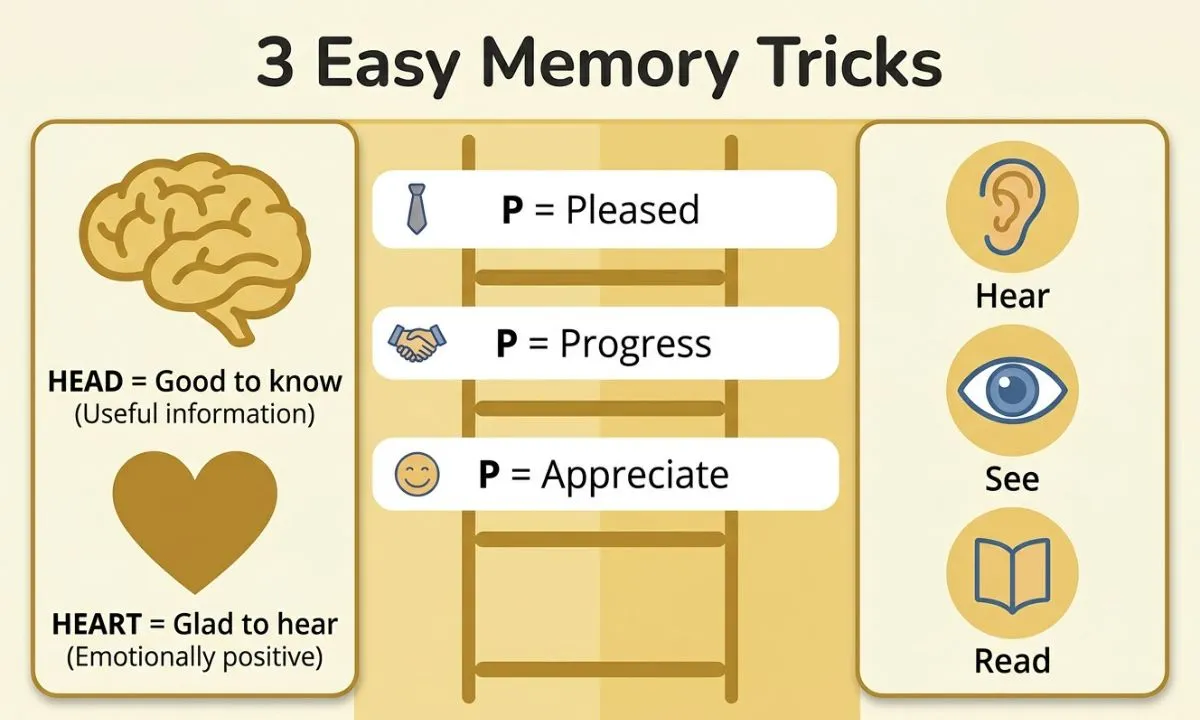
1. The “Head vs. Heart” Rule (good to know vs. glad to hear)
- 🧠 Head (information): use “Good to know” when your brain receives a useful fact.
- ❤️ Heart (emotion): use “Glad to hear” when the news makes you feel warm or relieved.
2. The “3-P Anchor” for business emails
Anchor your phrase on Pleasure (“pleased to hear”), Progress (“encouraging progress”), or Appreciation (“I appreciate the update”).
3. The “Medium Match” rule
- Hearing a voice or news: “Good to hear.”
- Seeing a person or photo: “Good to see.”
- Reading a message (less common): “Good to read.”
Common Mistakes to Avoid (and How to Fix Them)
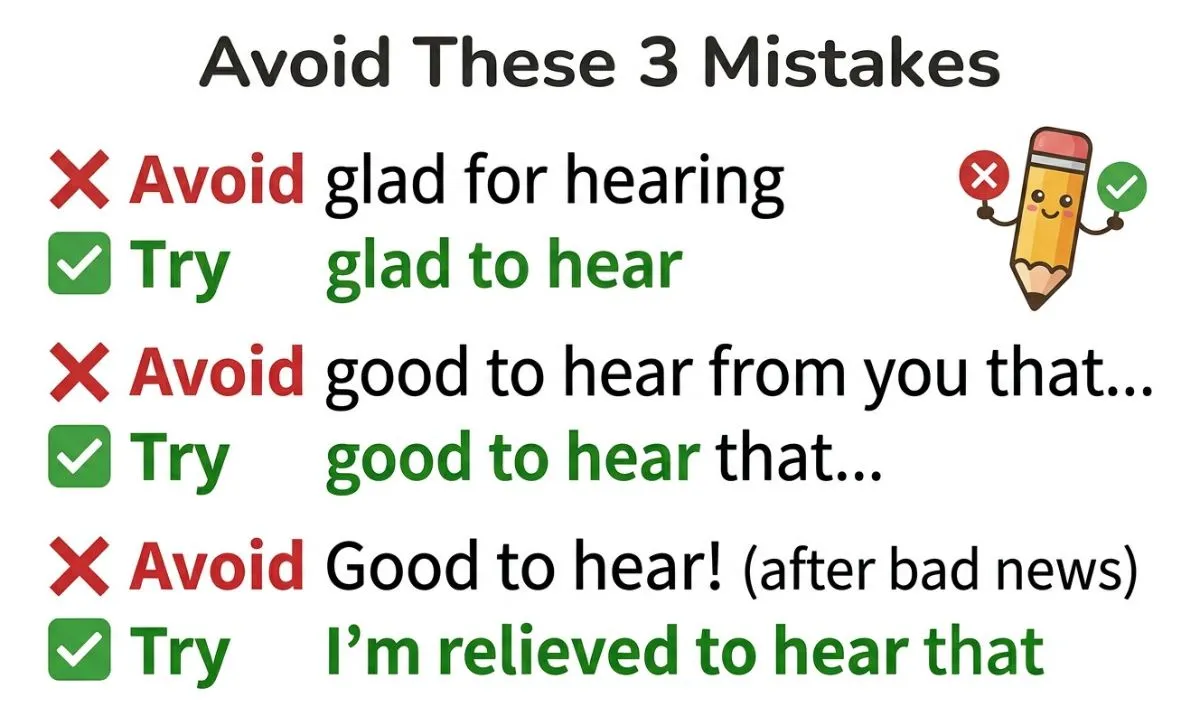
Mistake 1: The Gerund Trap
❌ Incorrect: “I am very glad for hearing that you passed.”
✅ Correct: “I am very glad to hear that you passed.”
Rule: Feeling adjectives such as glad, happy, and pleased are normally followed by a to-infinitive (to hear), not for + -ing.
Mistake 2: Mixing Up “Hear That” and “Hear From You”
❌ Clunky: “It was good to hear from you that the bug was fixed.”
✅ Clearer: “It was good to hear that the bug was fixed.”
Rule: Use “hear from you” to welcome contact after a gap (“Good to hear from you!”). When you react to specific news, “hear that” is shorter and clearer.
Mistake 3: Using “Good to Hear” for News That Is Still Bad
❌ Awkward: “My dog was sick, but he is okay now.” — “Good to hear!” (it can sound like you are reacting to the illness).
✅ Better: “Oh, I’m so relieved to hear he’s doing better!”
Rule: When good news follows a worry, name the relief or the recovery, not just the news.
Also Read This: Meantime vs Mean Time
How to Reply When Someone Says “Good to Hear!”
Finish the exchange naturally with a short follow-up. Keep your reply brief and warm.
In professional contexts:
- “Thank you! I’ll keep you posted on further updates.”
- “Appreciate it! Have a great rest of your week.”
In casual contexts:
- “Thanks! How have things been with you?”
- “Yeah, huge relief! Thanks for checking in.”
Practice Worksheet: Test Your Knowledge
Section 1: Multiple Choice
Your boss emails: “The client extended our contract for another year.” What is the best professional response?
- A) Sweet, love that for you!
- B) I am pleased to hear that; thank you for letting me know.
- C) Good to hear from you that they extended.
- D) I am glad to hear this news.
Answer key: B. It is formal, grammatically correct, and thanks to your boss. A is too casual, C is clunky, and D uses “for hear” instead of “to hear.”
Section 2: Spot and Fix the Error
Identify the error: “Thanks for the email! I am very delighted to hear that your team won the award.”
Answer key: The error is “for hear.” Use the to-infinitive: “I am delighted to hear that your team won the award.” (“Really delighted” or simply “delighted” also sounds more natural than “very delighted.”)
Dictionary evidence good to hear
Dictionary evidence: Oxford Learner’s Dictionaries gives the example “I was delighted to hear your good news” under hear, which shows the same adjective + to hear pattern used in “good to hear.”
Dictionary evidence: Oxford Learner’s Dictionaries defines hear from as receiving a letter, email, or phone call from someone, and gives the example “It was good to hear from him again.”
Pronunciation source: Oxford Learner’s Dictionaries lists the US pronunciation /hɪr/ for hear.
Also Read This: Explore a vast collection of English synonyms
Frequently Asked Questions
Is “good to hear” grammatically correct?
Yes. It is a short form of “That is good to hear,” built from an adjective plus a to-infinitive, and it is standard in speech and informal writing.
Is “good to hear” formal or informal?
It is neutral to informal, so it works in friendly workplace messages. For formal letters or senior readers, choose “I am pleased to hear that.”
What can I say instead of “glad to hear that” in a formal email?
Try “I am pleased to hear that,” “I was delighted to learn that,” or “That is encouraging news.” Each keeps a polite, professional tone.
Is it polite to say “good to hear”?
Yes, it is polite when you react to positive news. Avoid it when the news is mixed or still upsetting; use a phrase such as “I’m relieved to hear that” instead.
What is the difference between “good to hear” and “good to know”?
“Good to hear” reacts to news with feeling, while “good to know” acknowledges useful information. Use “good to know” for facts such as schedule changes.
Can I say “good to hear” when someone shares bad news?
No. For bad news, say “I’m sorry to hear that” first, and use “glad to hear” only after things improve.
Is it “good to hear that” or “good to hear it”?
Both appear, but they work differently. Use “that” to introduce a clause (“good to hear that you passed”) and “Glad to hear it” as a standalone reply.
What is a short text reply instead of “good to hear”?
Try “Great news!”, “Love that for you!”, or “Glad it worked out!” They are quick and friendly for texts and chats.
Final Takeaway
The best good to hear synonyms depends on tone, channel, and context: formal phrases for work emails, warm ones for people you care about, and short ones for texts. Pick the phrase that matches the news and the relationship, and you will sound natural every time.

2 thoughts on “Good to Hear Synonym: 60 Other Ways to Say It With Confidence”