

If you’ve typed the word “enjoy” for the fifth time in one email, you already know the problem. It’s a useful verb, but it’s also a lazy one when it shows up too often. Whether you’re writing a travel blog, a product review, a wedding speech, or a school essay, leaning on the same word again and again flattens your writing.
That’s where synonyms for enjoy come in handy. This guide breaks down 30+ enjoy synonyms with clear meanings, real examples, and notes on when each word actually fits.
You’ll also find a quick-reference table, a context-based cheat sheet, common mistakes to avoid, and answers to the questions people ask most about words similar to enjoy. By the end, picking another word for enjoyment will feel automatic instead of awkward.
What Does “Enjoy” Mean?
Before jumping into synonyms of enjoy, it helps to nail down what the word actually means.
At its core, “enjoy” describes the act of getting pleasure, satisfaction, or benefit from something. It can point to a feeling (happiness while doing something) or a state (having access to something good).
Dictionaries generally agree that enjoyment carries a mix of pleasure and value; you’re not just doing something, you’re getting something positive out of it.
Enjoy as a verb works in a few distinct ways:
Enjoying an activity “She enjoys hiking every weekend.”
Enjoying a person’s company “We really enjoy spending time with our grandparents.”
Enjoying food or experiences “He enjoyed the pasta more than the dessert.”
Enjoying a benefit or privilege “The company enjoys a strong reputation in the industry.”
That last use is important and often overlooked. “Enjoy” doesn’t always mean fun; sometimes it means “to have” or “to hold,” especially in formal or legal writing (e.g., “residents enjoy free parking”).
What Major Dictionaries Say About “Enjoy”
Different dictionaries frame “enjoy” slightly differently, which explains why some synonyms feel more formal while others feel casual or emotional. Here’s a quick side-by-side.
| Dictionary | What It Emphasizes |
| Merriam-Webster | Taking pleasure in something; also “to have as a benefit” |
| Cambridge | Getting pleasure from something you do or experience |
| Collins | Taking pleasure in or from an activity; also possessing something advantageous |
| Vocabulary.com | A strong compliment liking something enough that it makes you happy |
Notice the pattern:
Every major source ties “enjoy” to pleasure, but several also mention possession or advantage. That distinction matters when you’re choosing a formal synonym for enjoy versus a casual one.
Best Synonyms for Enjoy at a Glance
Like
Love
Appreciate
Relish
Savor
Delight in
Revel in
Adore
Cherish
Treasure
Admire
Fancy
Dig
Bask in
Indulge in
Luxuriate in
Lap up
Take pleasure in
Rejoice in
Be fond of
Be keen on
Get a kick out of
Have a ball
Thrive on
Prize
Value
Esteem
Take joy in
Find satisfaction in
Be entertained by
Glory in
25+ Enjoy Synonyms and Their Meanings
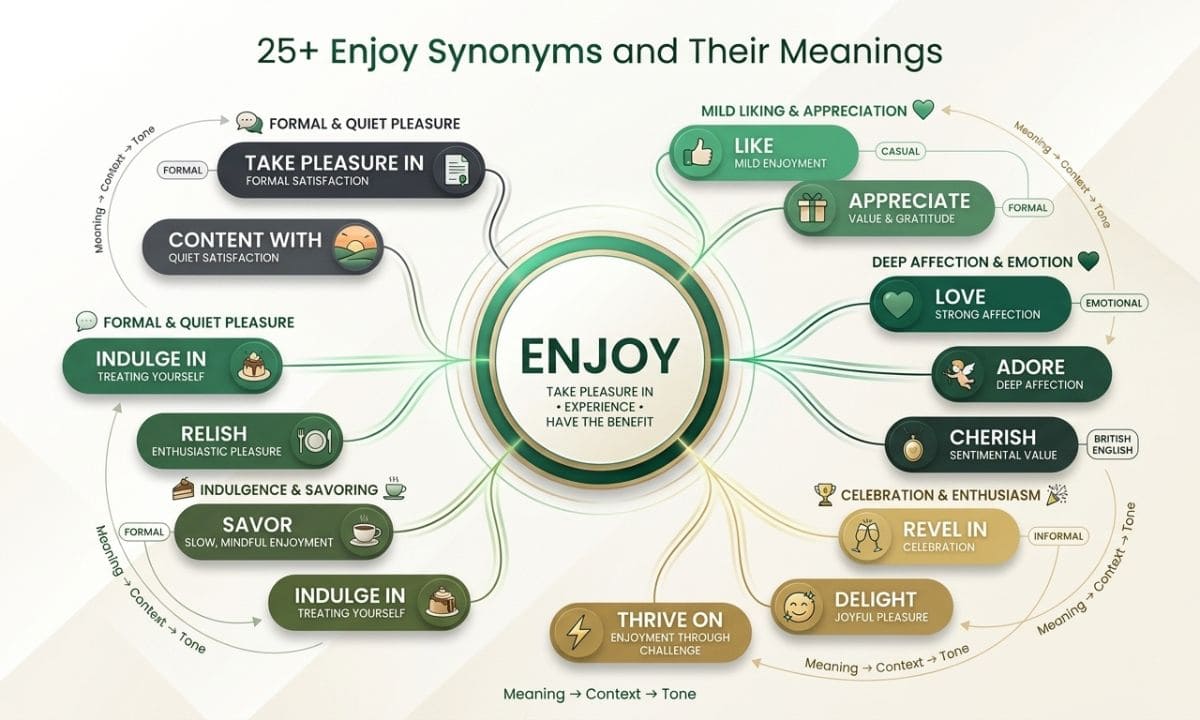
Here’s where we get specific. Each synonym for enjoy below includes what it means, where it fits best, three example sentences, and a quick usage tip.
Like
Having a positive feeling toward something, without much intensity.
Best for
Casual, everyday statements.
Examples
- “I like tea more than coffee.”
- “She likes quiet mornings.”
- “We like this neighborhood a lot.”
Usage tip
“Like” is milder than “enjoy,” so don’t use it when you want to show real enthusiasm.
Love
Feeling strong affection or deep pleasure.
Best for
Expressing genuine enthusiasm.
Examples
- “He loves playing the guitar.”
- “They love their new apartment.”
- “I love a good mystery novel.”
Usage tip
Reserve “love” for things you’re genuinely passionate about; overusing it weakens its impact.
Appreciate
Recognizing the value, quality, or effort behind something.
Best for
Gratitude-driven or professional contexts.
Examples
- “I appreciate your patience during the delay.”
- “She appreciates fine art.”
- “We appreciate the team’s hard work.”
Usage tip
Use “appreciate” when the focus is on value or gratitude, not just fun.
Relish
Taking deep, enthusiastic pleasure in something, often with anticipation.
Best for
Challenges, meals, or moments you actively look forward to.
Examples
- “He relishes a good debate.”
- “She relished every bite of the cake.”
- “The team relishes the chance to prove themselves.”
Usage tip
“Relish” works best with things that involve effort or excitement, not passive activities.
Savor
Enjoying something slowly and fully, usually to make it last.
Best for
Food, travel, and quiet reflective moments.
Examples
- “They savored the sunset from the balcony.”
- “He savored his last day of vacation.”
- “She savored the aroma of fresh coffee.”
Usage tip
Don’t use “savor” for fast-paced or high-energy situations; it implies slowness.
Delight
Finding great pleasure or amusement in something.
Best for
Lighthearted or playful moments.
Examples
- “The kids delight in splashing in puddles.”
- “She delights in surprising her friends.”
- “He delights in solving tricky puzzles.”
Usage tip
This phrase pairs well with small, joyful moments rather than big achievements.
Revel in
Enjoying something with enthusiasm, almost like celebrating it.
Best for
Triumphant or emotionally charged moments.
Examples
- “The team revels in their championship win.”
- “She revels in the freedom of summer break.”
- “He revels in the applause after his speech.”
Usage tip
Avoid “revel in” in formal writing; it reads as expressive and celebratory, not neutral.
Adore
Loving something deeply, often with emotional warmth.
Best for
People, pets, or things you’re fond of.
Examples
- “She adores her nieces.”
- “They adore their morning walks.”
- “He adores classic films.”
Usage tip
“Adore” leans emotional and personal; it’s less common in business or academic writing.
Cherish
Holding something as precious, usually with emotional or sentimental value.
Best for
Memories, relationships, and meaningful moments.
Examples
- “She cherishes her grandmother’s letters.”
- “We cherish our time together.”
- “He cherishes his childhood home.”
Usage tip
Use “cherish” for lasting sentiment, not fleeting pleasure.
Treasure
Valuing something as rare, important, or irreplaceable.
Best for
Memories, relationships, or opportunities.
Examples
- “I treasure every conversation we have.”
- “She treasures the necklace her mother gave her.”
- “They treasure this small tradition.”
Usage tip
“Treasure” works well as both a verb and a noun-driven metaphor, but keep it for meaningful subjects.
Admire
Respecting or appreciating something because of its qualities.
Best for
Talent, beauty, or achievement.
Examples
- “He admires her dedication to the project.”
- “We admire the craftsmanship of the furniture.”
- “She admires his honesty.”
Usage tip
“Admire” leans toward respect more than pleasure; don’t swap it in for casual enjoyment.
Fancy
Liking or wanting something. This is informal and mostly used in British English.
Best for
Casual conversation.
Examples
- “I fancy a walk before dinner.”
- “She fancies trying the new café.”
- “Do you fancy a coffee?”
Usage tip
Skip “fancy” in formal or American business writing; it sounds too casual there.
Dig
Genuinely liking something. This is slang and highly informal.
Best for
Informal, conversational tone.
Examples
- “I really dig this playlist.”
- “She digs vintage fashion.”
- “We dig the new café downtown.”
Usage tip
Only use “dig” in casual writing; never use it in resumes, reports, or formal emails.
Bask in
Soaking up something pleasurable, often praise, attention, warmth, or success.
Best for
Moments of recognition or comfort.
Examples
- “He basked in the crowd’s applause.”
- “She basked in the afternoon sun.”
- “The team basked in their well-earned success.”
Usage tip
“Bask in” almost always pairs with something received or experienced, such as attention, praise, success, or sunlight.
Indulge in
Allowing yourself to enjoy something, often as a treat.
Best for
Small pleasures or occasional splurges.
Examples
- “We indulged in dessert after dinner.”
- “She indulges in a spa day once a month.”
- “He indulged in a lazy Sunday.”
Usage tip
Use “indulge in” when there’s a sense of treating yourself. It can sound odd when applied to routine activities.
Luxuriate in
Enjoying something with a feeling of comfort or indulgence.
Best for
Relaxation and comfort-focused moments.
Examples
- “She luxuriated in the warm bath.”
- “He luxuriated in a quiet weekend at home.”
- “They luxuriated in the hotel’s spa.”
Usage tip
This word suits slow, comfort-driven scenes, not action or excitement.
Lap up
Eagerly enjoying something, sometimes praise or attention. This is informal.
Best for
Enthusiastic, almost eager enjoyment.
Examples
- “The dog lapped up the attention.”
- “He lapped up the compliments.”
- “The crowd lapped up every joke.”
Usage tip
“Lap up” can sound slightly critical, as if someone is enjoying something too eagerly. Read the context carefully.
Take Pleasure in
Getting satisfaction or happiness from something.
Best for
Formal or reflective writing.
Examples
- “She takes pleasure in helping others.”
- “He takes pleasure in a job well done.”
- “We take pleasure in small daily rituals.”
Usage tip
A safe, neutral formal synonym for “enjoy” that fits many professional contexts.
Rejoice in
Feeling great joy because of something.
Best for
Celebratory or emotional writing.
Examples
- “They rejoice in their daughter’s success.”
- “She rejoices in the arrival of spring.”
- “The town rejoices in its yearly festival.”
Usage tip
Keep “rejoice in” for genuinely joyful, often shared occasions.
Be Fond of
Having a gentle, ongoing liking for something.
Best for
Describing preferences over time.
Examples
- “He’s fond of long train journeys.”
- “She’s fond of old jazz records.”
- “They’re fond of quiet evenings at home.”
Usage tip
Use this phrase for steady, low-key affection, not intense excitement.
Be Keen on
Being enthusiastic about something. This expression is mostly used in British English.
Best for
Interests and hobbies.
Examples
- “She’s keen on painting.”
- “He’s keen on trying new restaurants.”
- “They’re keen on weekend hikes.”
Usage tip
It works well in casual or semi-formal British English contexts.
Get a Kick Out of
Finding something amusing or satisfying. This is informal.
Best for
Lighthearted, fun moments.
Examples
- “He gets a kick out of trivia nights.”
- “She gets a kick out of surprising people.”
- “We get a kick out of old sitcoms.”
Usage tip
Keep this strictly conversational; it doesn’t belong in formal writing.
Have a Ball
Having a great time. This is an informal idiom.
Best for
Fun events or trips.
Examples
- “We had a ball at the reunion.”
- “They had a ball on their road trip.”
- “The kids had a ball at the fair.”
Usage tip
This idiom is playful and should be avoided in professional or academic contexts.
Thrive on
Growing or doing well because of something, often challenge or stimulation.
Best for
Energy, motivation, and challenging situations.
Examples
- “She thrives on tight deadlines.”
- “He thrives on new challenges.”
- “The team thrives on collaboration.”
Usage tip
Use “thrive on” when enjoyment comes from stimulation or challenge, not relaxation.
Prize
Valuing something very highly.
Best for
Formal or reflective writing about priorities.
Examples
- “She prizes her independence.”
- “He prizes honesty above all else.”
- “They prize their family traditions.”
Usage tip
“Prize” suits abstract values more than everyday activities.
Esteem
Holding someone or something in high regard.
Best for
Formal, respectful contexts.
Examples
- “We esteem her contributions highly.”
- “He is esteemed by his colleagues.”
- “They esteem the old traditions of the village.”
Usage tip
“Esteem” is closer to respect than enjoyment, so use it carefully.
Synonyms for Enjoy in Different Contexts
Not every synonym fits every situation. A word that sounds natural in a food blog might feel out of place in a formal report. Use this table to match the right word to the right setting.
| Context | Best Synonym | Example |
| Food and drink | Savor | “She savored the last slice of cake.” |
| Formal or professional writing | Appreciate | “We appreciate your continued support.” |
| Deep personal connection | Cherish | “He cherishes his time with family.” |
| Adventure or travel | Revel in | “They reveled in the freedom of the open road.” |
| Casual conversation | Dig / Like | “I really dig this new café.” |
| Achievement or success | Bask in | “She basked in the recognition.” |
| Small treats or comfort | Indulge in | “He indulged in a slow Sunday brunch.” |
| Hobbies and interests | Be keen on | “She’s keen on gardening.” |
Enjoy Synonyms: Which Word Should You Choose?
Choosing among synonyms for enjoyment is really about matching intensity and tone to what you’re describing. Use this simple guide as a mental shortcut.
- If you mean simple preference → Like
- If you mean strong enjoyment → Love
- If you mean recognizing value → Appreciate
- If you mean deep enjoyment → Relish
- If you mean slow, full enjoyment → Savor
- If you mean great pleasure → Delight in
- If you mean enthusiastic enjoyment → Revel in
- If you mean meaningful value → Treasure
Think of it as a dial, not a switch. On the low end, you have mild preference (like, be fond of). On the high end, you have full-blown enthusiasm (revel in, delight in).
The middle ground appreciate, relish, savor covers most everyday writing.
Enjoy vs. Its Synonyms: Are They Always Interchangeable?
Not quite. While these words all relate to pleasure or satisfaction, swapping them in without thinking can change your meaning sometimes in a way that feels off to native speakers.
Enjoy vs Like
“Enjoy” implies active pleasure while doing something; “like” is more general and can apply even when you’re not currently doing it. “I like coffee” works even if you’re not drinking it right now. “I enjoy coffee” suggests the pleasure happens during the experience.
Enjoy vs Love
“Love” is stronger and more emotional. Saying you “love” something implies deeper attachment than simply enjoying it.
Enjoy vs Appreciate
“Enjoy” is about pleasure; “appreciate” is about recognizing worth. You can appreciate a documentary’s quality without necessarily enjoying (finding pleasurable) its heavy subject matter.
Enjoy vs Savor
“Savor” always implies taking your time. You can enjoy something quickly, but you can’t savor something in a rush.
Enjoy vs Relish
“Relish” adds enthusiasm and anticipation. It often applies to challenges or things you’re eager for, not just passive enjoyment.
Enjoy vs Indulge
“Indulge” suggests a treat or something slightly excessive. “Enjoy” carries no such implication; it can apply to anything from a walk to a meal.
Common Mistakes When Using Synonyms for Enjoy
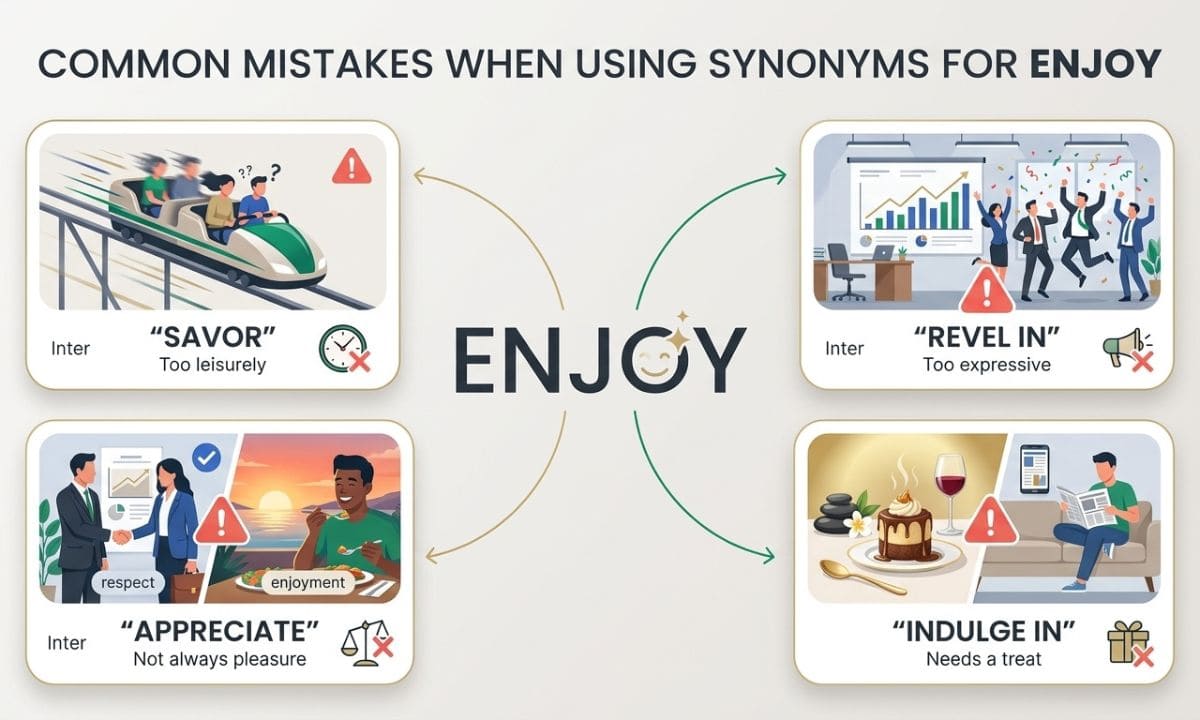
Picking a fancier word doesn’t always mean picking the right one. Here are the mistakes people make most often when using different ways to say enjoy.
Mistake 1: Using “savor” for everything.
Not every enjoyable moment is slow. “He savored the roller coaster ride” sounds strange because roller coasters are fast, not leisurely.
Mistake 2: Using “revel in” in formal contexts where it sounds too expressive.
A business report that says the company “revels in” quarterly growth reads as overly dramatic. Stick with “benefits from” or “enjoys” in formal writing.
Mistake 3: Confusing “appreciate” with simple enjoyment.
You can appreciate something without enjoying it, and vice versa. Saying “I appreciate horror movies” when you mean “I enjoy horror movies” shifts the meaning toward respect rather than pleasure.
Mistake 4: Using “indulge in” when no “treat” is implied.
“She indulges in reading the news every morning” sounds off because reading the news isn’t typically a treat. Save “indulge in” for genuine small luxuries.
Synonyms for Enjoy in a Sentence
Seeing these words in context makes the differences click faster. Here’s a quick example set:
“I enjoy long walks on the weekend.” → “I relish long walks on the weekend.”
“She enjoys good food.” → “She savors good food.”
“We enjoy their company.” → “We cherish their company.”
“He enjoys a challenge.” → “He thrives on a challenge.”
“They enjoyed the concert.” → “They reveled in the concert.”
Swap one word for another and notice how the sentence’s energy shifts, some feel calmer, others more excited.
Explore More Grammar Rules
Stutter vs Studder: Correct Spelling and Meaning Guide in 2026
Anise vs Aniseed: Are They the Same? Find Out the Real Difference
Opportunity Synonyms: 30+ Words, Alternatives, Meanings & Examples
Frequently Asked Questions
What is the best synonym for enjoy?
There’s no single “best” one; it depends on context. “Appreciate” works well formally, while “relish” or “savor” fit more descriptive, personal writing.
What is a formal word for enjoy?
“Appreciate” and “take pleasure in” are the most common formal synonyms for enjoy, especially in professional or academic writing.
What is a stronger word than enjoy?
“Relish,” “revel in,” and “delight in” all express stronger, more intense enjoyment than the plain word “enjoy.”
What is another word for enjoying food?
“Savor” is the most natural choice for describing enjoying food slowly and fully.
What is another word for enjoying a moment?
“Cherish” or “treasure” both work well for enjoying a meaningful or fleeting moment.
Is appreciation the same as enjoyment?
Not exactly. Appreciation focuses on recognizing value or quality, while enjoyment focuses on the pleasure you feel. You can appreciate something without truly enjoying it.
What is a synonym for enjoying yourself?
“Have a ball,” “revel,” and “have a great time” are common ways to describe enjoying yourself, especially in casual speech.
Conclusion
“Enjoy” is a perfectly good word, but it’s not the only one and it’s rarely the most precise one. Once you know the difference between liking, savoring, relishing, and reveling in something, your writing starts to sound more specific and more human. Next time you reach for “enjoy,” pause for a second and ask what kind of pleasure you’re really describing. The right synonym is probably already on this list.
